
The International Monetary Fund revised its growth projections across the global economy this week as Qatar, Kuwait, and Bahrain face negative growth revisions for FY26.
IMF forecasts growth contractions for three GCC economies citing commodity prices as a fundamental supply-side factor hindering growth across the three economies.
The UAE, KSA, and Oman saw growth revised but growth remains positive for FY26.
MENA Outlook Revised
The IMF downgraded growth from 3.3% to 3.1% across the global economy whilst growth was also downgraded for the Middle East and North Africa (MENA) region, forecasting 1.1% real GDP growth (FY26): down 2.8% from original estimates.
Qatar’s Outlook
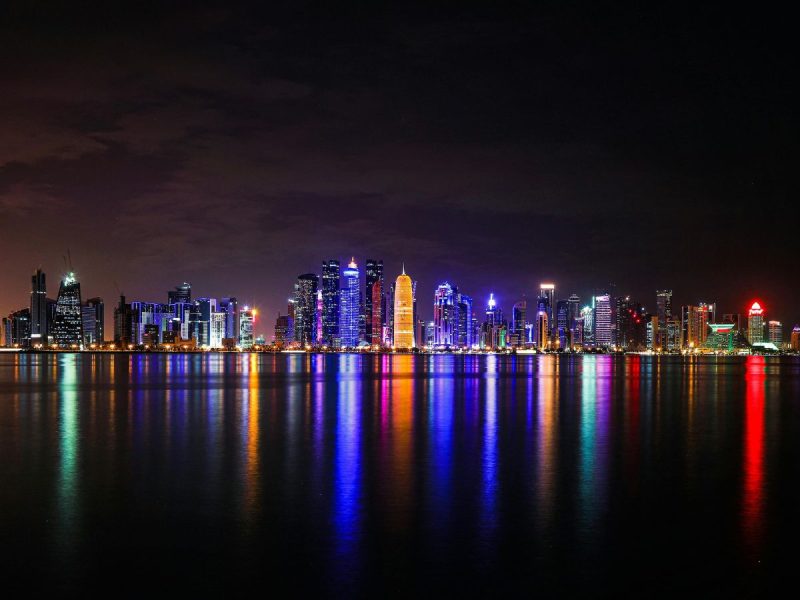
Qatar’s economic outlook is particularly bleak, experiencing a dramatic downward revision of 14.7%, leading to an anticipated contraction of 8.6% this year.
Yet under the assumption of a short-lived conflict, the MENA bounces back quickly, with FY27 GDP growth rebounding to 4.6%: a jump of 0.6% from January forecasts.
Qatar is one of three states with negative growth forecasts for FY26.
KSA Resilience
Yet KSA has shown greater resilience, with its growth forecast reduced by approximately 1.4%: the smallest forecast reduction out of all six GCC economies.
Alternative oil export routes are attributed to the figures, with the East-West pipeline to Yanbu delivering sustained oil exports, exportable through the Red Sea corridor.
The IMF has also increased the growth forecast for Saudi Arabia in 2027 to 4.5%, demonstrating confidence in the Saudi economy.
Stay Up to Date with the Latest Updates at Finance ME
Jebel Ali SME on “Made in the UAE”
What Qatar WHT Reform Means for Global Business
EDGE’s Rodrigo Torres on Risk, Sovereignty and Defence Finance in a Multipolar World