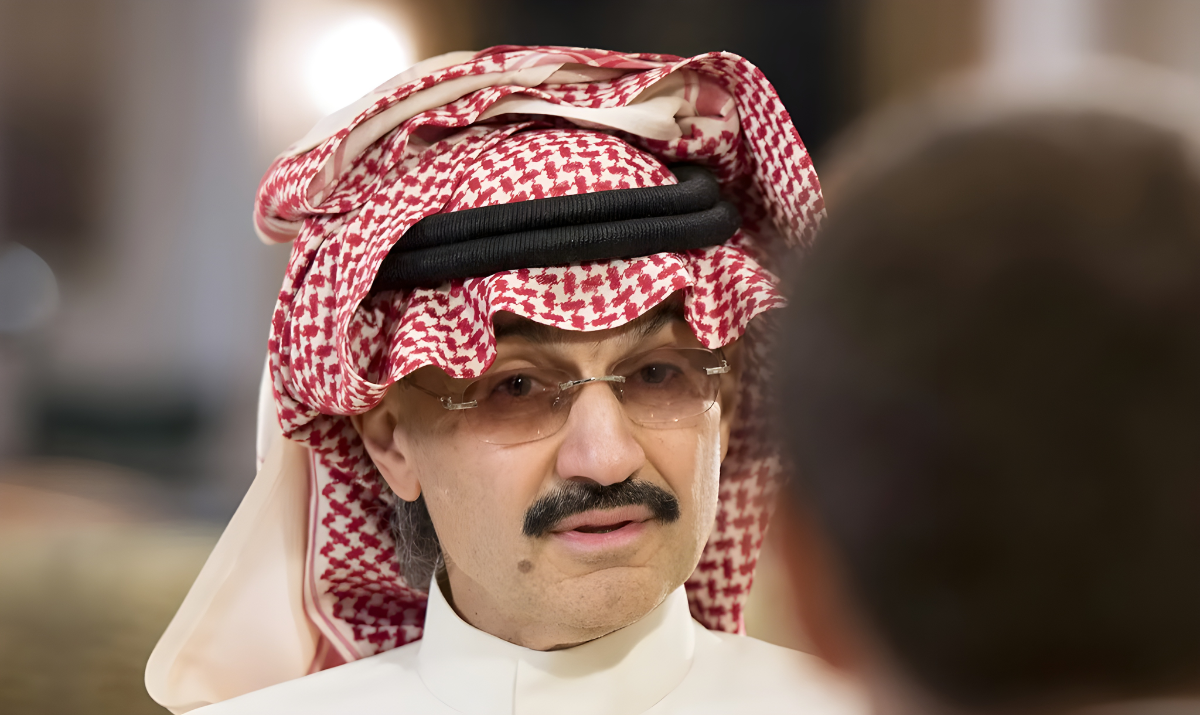
Saudi entrepreneur, Prince Alwaleed Bin Talal Alsaud, recorded significant gains on 31 May adding $949.1M to his wealth in a single day, citing sustained equity gains in his firm: Kingdom Holding Company.
The value of KHC surged following investor optimism around a potential IPO of SpaceX, owned by Elon Musk.
Earlier this year, KHC disclosed that its combined investments in SpaceX, including X, xAI, and Starlink, rose to $9.2B from $7.5B in December FY25.
KHC shares surged to $3.6 (SAR 13.58), their highest price since January 2016, bringing the company’s market value to $12B (SAR 45.8B) by the end of May FY26.
SpaceX is aiming for a valuation between $1.75T and $2T, eclipsing the previous IPO record of $1.7T set by Saudi Aramco in 2019. Musk holds nearly 40% of SpaceX, which could elevate his fortune to over $1.4 trillion post-IPO.
Musk is also on track to become the first CEO of two companies with market capitalisations exceeding $1T as Tesla’s valuation surpassed $1.6T as of May 31.
KHC boasts a diversified portfolio across public and private markets, encompassing sectors such as equities, real estate, hospitality, and alternative investments aimed at long-term value creation.
At the end of Q1 2026, KHC’s net assets were reported at $19.4B (SAR 73.3B). The firm has investments in entities such as Four Seasons, flynas, Citigroup, and BSF.
Recently, KHC agreed to acquire a 70% stake in Al Hilal Club Company for SAR 840M, with an enterprise value of approximately $371.1M (SAR 1.4B).
Stay Up to Date with the Latest Updates at Finance ME
Dubai Introduces Second Stimulus Package Totalling $408M
EDGE’s Rodrigo Torres on Risk, Sovereignty and Defence Finance in a Multipolar World