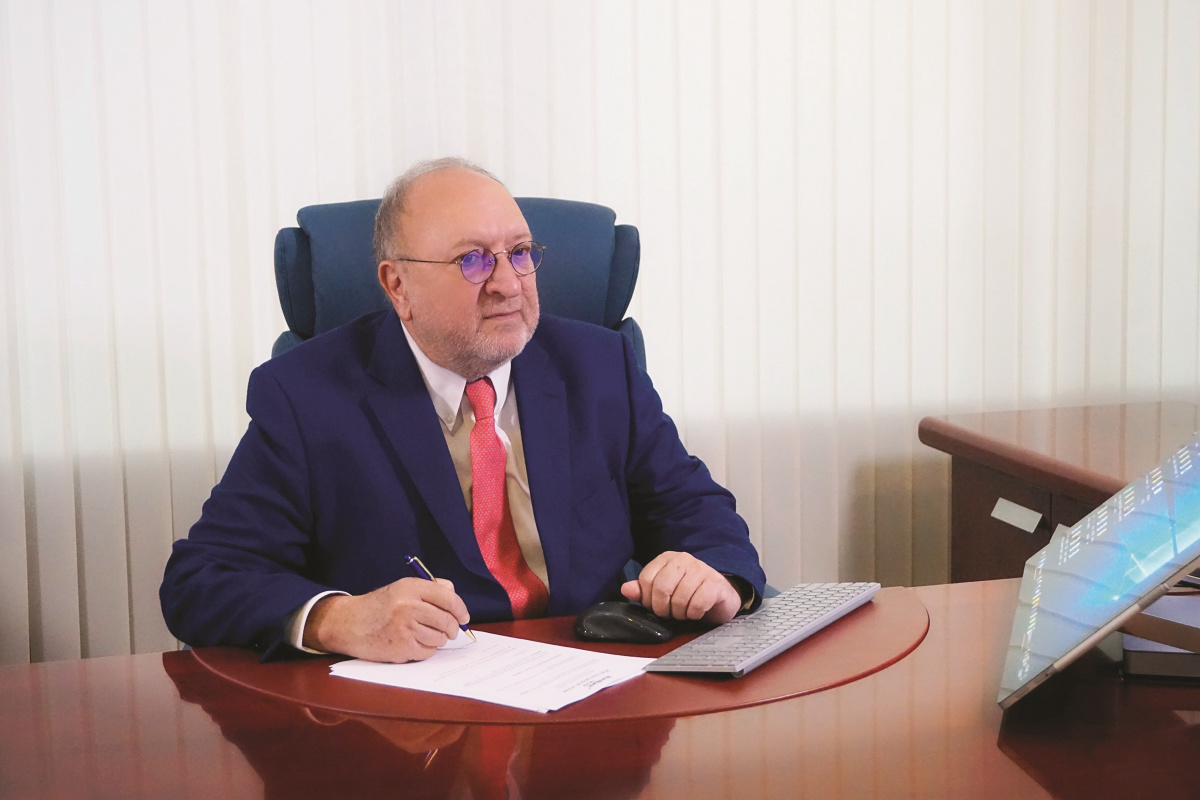
The regional conflict has created a series of shocks to equity markets. I spoke to Naser Taher, Founder and Chairman of MultiBank, on the firm’s strategy, the future of the U.S. dollar and what signals investors are underpricing in the Gulf despite the conflict.
Taher’s message is that trust remains critical for firms operating in the Gulf.
How is MultiBank hedging the volatility and what opportunities is it providing for growth in FY26? Which specific equity markets?
Volatility is not an exception to our model; it is the environment our infrastructure is designed to serve. MultiBank Group has operated through two decades of market cycles, including the 2008 financial crisis, the pandemic, and now the shocks created by the regional conflict.
Our role is not to take directional positions on behalf of our clients. It is to provide the infrastructure that allows them to manage their own exposure with confidence: deep liquidity from tier-1 banks, instant execution, AI-driven smart routing, and access to more than 20,000 instruments.
During the recent conflict, Brent moved from roughly $71 per barrel before the conflict to nearly $120 at its peak, then eased back toward $78 by mid-June as a de-escalation framework began to take shape. Regional equities saw a sharp, short-lived repricing in the opening weeks, particularly across the UAE, Saudi Arabia, and the wider GCC market. They then quickly recovered much of that ground, with the broader GCC composite holding up better than global benchmarks such as the S&P 500.
For an institution like ours, that pattern is reassuring rather than alarming. It confirms that the region’s markets now have the depth, liquidity, and confidence to absorb a serious external shock and rebound. That is exactly the foundation long-term capital looks for.
For FY26, the clearest opportunities lie in the asset classes that volatility activates: gold, energy, and FX, where heightened uncertainty translates directly into stronger trading activity, alongside the structural migration of trading and settlement onto blockchain infrastructure.
What are investors telling you about sentiment toward the GCC? Is it short-term disruption but the same long-term fundamentals or is this narrative overused?
It is not overused.
The conflict tested the thesis in real time and the region passed that test. The clearest evidence is in the most recent data, not in the rear-view mirror. The UAE economy grew 5.6% in 2025, with the non-oil sector expanding 6.1% and now accounting for around 77% of GDP.
Greenfield foreign direct investment rose 78% over the same year to a record $33.2B, placing the country among the world’s top ten destinations. That is momentum carried through the conflict, not merely before it.
What investors tell me is that they increasingly distinguish between headline risk and structural fundamentals.
The conflict was a genuine shock. The Strait of Hormuz was under pressure, oil briefly moved above $100, and regional markets faced immediate uncertainty. Yet capital continued to arrive.
By Henley’s estimate, the UAE attracted a net inflow of close to 10,000 millionaires in 2025, the highest of any country in the world.
That is the definition of a destination, not a short-term trade. Serious investors are not blind to geopolitical risk; it is part of every conversation. What has changed is that they increasingly see the GCC as a region capable of converting stability into continuity of operations. That is what long-term capital values most, and it is why the region’s fundamentals are not simply a narrative.
Do you believe the U.S. dollar will remain dominant in global trade and finance over the next decade?
Yes, the dollar will remain dominant over the next decade.
However, it will become less monopolistic, and that is a healthy evolution rather than a crisis. Its share of global reserves has eased to roughly 56%-58%, down from around 72% at the turn of the century.
Yet it still settles close to 89% of all foreign exchange transactions and remains central to global trade invoicing. There is still no genuine substitute at scale. The euro accounts for about 21% of global reserves, while the renminbi accounts for about 2%, constrained by capital controls. What is changing is not the core of the system, but the financial plumbing beneath it. We are seeing the growth of local-currency settlement, record central-bank gold accumulation, and digital multi-currency platforms such as mBridge, which the UAE has helped pioneer alongside China, Hong Kong, and Thailand.
For the GCC, the dollar remains central because regional currencies are largely pegged to it, and energy is still priced in it. Diversification is therefore prudent risk management, not an ideological shift. The sensible posture for the next decade is clear: multipolar at the margins, dollar-anchored at the core.
How do you see AI, automation and algorithmic trading changing financial markets over the next five years, and what risks should regulators and investors pay attention to?
We are already living this change. It is not a future scenario. At MultiBank Group, AI-driven smart routing already optimises execution across our platforms, and we are migrating more than $20B in daily trading volume onto blockchain infrastructure for settlement.
Over the next five years, I expect three major shifts to accelerate. First, execution costs will continue moving closer to zero. Second, markets will become increasingly continuous, with fewer limits imposed by geography or traditional operating hours. Third, real-world assets, from real estate to private credit, will continue moving on-chain through tokenisation.
The risks deserve equal attention. The first is concentration and herding. If multiple models converge on similar signals, they can amplify the very market movements they are designed to manage, making flash dislocations more likely. The second is explainability. Regulators and investors must be able to understand why an automated system acted in a certain way. The third is operational and cyber resilience, which becomes systemic once settlement is automated. The fourth, often overlooked, is that retail access is outpacing financial literacy.
My view is simple: technology should widen access while raising the standard of protection. Those two goals are not in conflict, and the firms that treat them as complementary will earn lasting trust.
Where do you currently see the most compelling investment opportunities across the GCC, and which sectors remain undervalued or overlooked by investors?
I would point investors toward the infrastructure beneath the headlines, rather than the headlines themselves. The most compelling opportunity is in financial and digital infrastructure: the rails of payments, settlement, custody, and tokenisation.
This is where the GCC is building genuine global capability.
Logistics and re-export trade are another major area. The disruption around the Strait of Hormuz was a clear reminder of how strategically positioned the region is within global flows. A third opportunity is the energy transition and the digital economy, where the communications sector alone attracted close to $10B of UAE greenfield FDI in 2025, much of it directed toward data centres and AI capacity.
As for what is overlooked, real estate is already well covered and broadly priced. The more undervalued story is the financial and digital infrastructure beneath those visible assets: mid-cap industrials, non-oil manufacturing under initiatives such as ‘Make in the Emirates’, and a private-credit market that remains thin relative to the size of the regional economy.
Investors often chase trophy assets. The more durable returns, however, are frequently built into the systems, platforms, and financial rails that make those assets more productive.
How is sustainability shaping the Gulf’s diversification?
Sustainability comes down to one test: would diversification survive a sustained period of low oil prices? Increasingly, the answer is yes.
The indicators I watch most closely are the share of non-oil activity in GDP, which reached roughly 77% in the UAE in 2025, and the growth rate of that non-oil base, which expanded by around 6% that year, outpacing the headline economy.
Beyond the headline figures, I look at the quality of investment rather than its volume. Greenfield, productivity-enhancing capital that builds capacity, is far more important than portfolio flows that can reverse quickly. I also watch private-sector credit growth, the rate of new business and SME formation, and the trend in each government’s fiscal break-even oil price, because these indicate how dependent the budget remains on hydrocarbons.
Diversification in the Gulf began as a government-led, capital-intensive effort. The encouraging signal now is that the next chapter is already visible: private capital and deeper, more liquid local markets are stepping up alongside the state. That hand-off, measured through non-oil revenue as a share of the budget and the depth of regional markets, is the real measure of durability. The early signals point firmly in the right direction.
What is the impact of family firms on governance, succession and capital-allocation in wealth creation?
Family businesses are the backbone of the GCC’s non-oil economy. They account for a major share of private-sector activity and employment, so the way they evolve will shape regional wealth for a generation.
Having built an institution myself, I see three defining challenges. The first is governance. Families must separate ownership from management and bring genuine independence onto boards, so decisions are made on merit rather than seniority. The second is succession. Too many families address it only when they are forced to. That is a mistake. The next generation is often educated abroad and arrives with different ambitions, risk appetites, and expectations. Succession must be formaliSed early.
The third is capital allocation. The region is moving from concentrated, relationship-driven investment toward diversified, institutional allocation. This includes a growing openness among younger generations to global diversification and digital assets, which many founders historically resisted.
The families that institutionalize will compound their wealth across generations. Those who do not will tend to fragment it. This is where structured, well-regulated financial infrastructure becomes essential. It gives family capital the rails to diversify, protect value, and endure.
From your position at the centre of global trading flows, what signals are you seeing today that most investors and policymakers are missing about the future of the GCC economy?
From where I sit, three signals are being underpriced.
The first is that the GCC is quietly shifting from being a source of capital to becoming a hub for capital. Flows are increasingly routed, settled, and managed here, not merely invested from here. That is a far more durable role than simply being a chequebook to the world.
The second is the speed at which trading, settlement, and real-world assets are migrating onto blockchain in this region. Regulatory clarity from frameworks such as Dubai’s VARA and Abu Dhabi’s ADGM is a real competitive edge that the global narrative still underestimates. The UAE executed its first government financial transaction using the Digital Dirham in late 2025, which was settled in under two minutes. That is not symbolic. It shows how quickly public financial infrastructure itself is being rebuilt.
The third signal is the one the recent conflict revealed most clearly: the region’s response to a severe external shock was resilience, not fragility. Capital stayed, institutions kept functioning, and confidence held.
What many investors and policymakers are missing is the direction of travel. The Gulf is moving from being the place where the world parks its money to the place where global financial infrastructure is increasingly built, operated, and trusted.
That transition, more than any single quarter’s data, is the story of the next decade.
Stay Up to Date with the Latest Updates at Finance ME
Sarah Al-Shawwaf: Vision 2030 Has Unlocked the Potential of Saudi Women
Mohamed Alabbar: Damascus City to Watch in Next Decade
EDGE’s Rodrigo Torres on Risk, Sovereignty and Defence Finance in a Multipolar World