
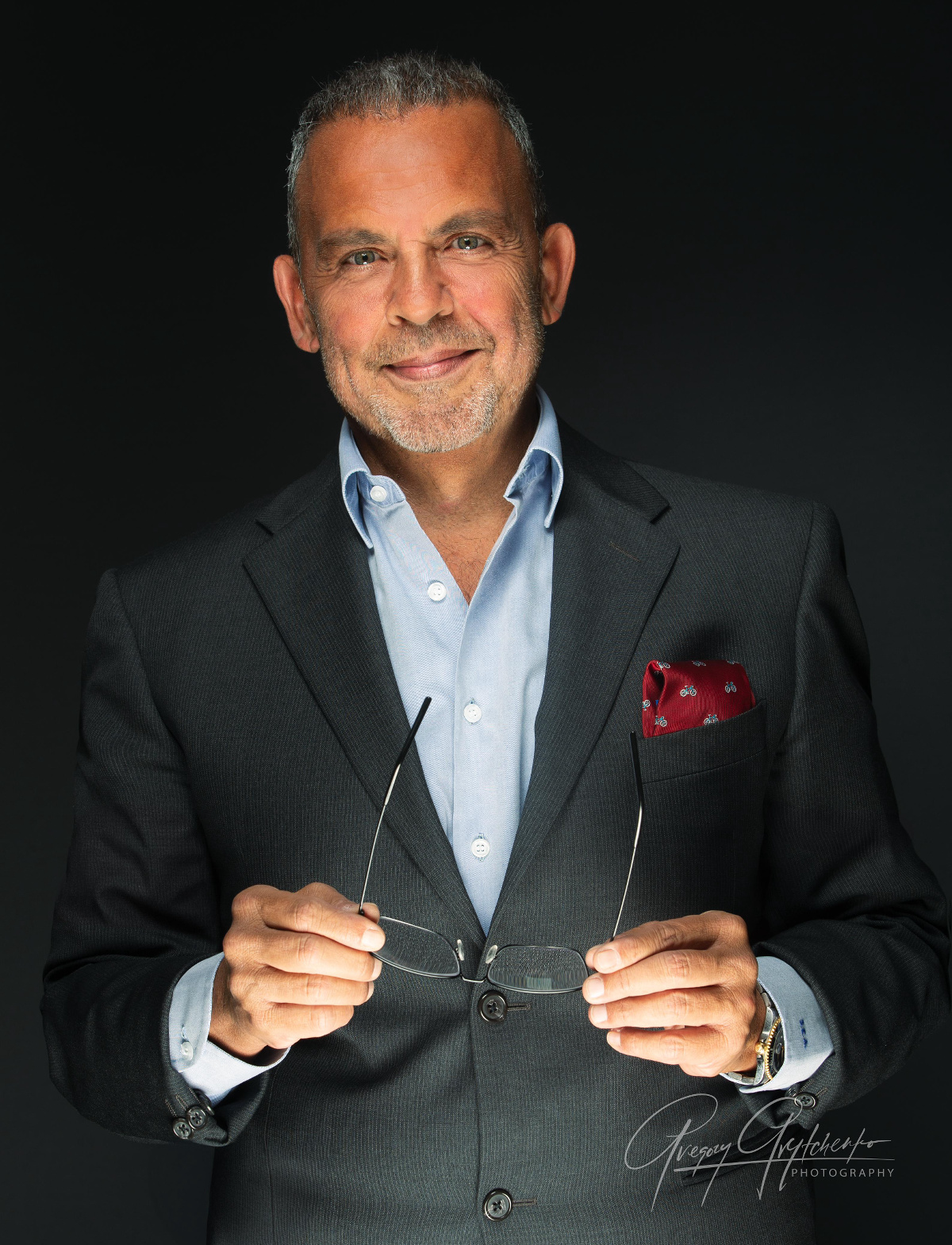
During my time at Carrefour, I was part of the regional leadership team as the business expanded from three hypermarkets to thirty-seven across eleven countries. The commercial demands were considerable, but the harder challenge was keeping the business recognisable as it moved from one market to the next.
The Key Question
The same question followed us everywhere: what about this business must never change, and what must be allowed to?
Get that balance wrong in one direction and the organisation becomes rigid. Decisions wait for head office, local teams lose confidence, and growth slows to the speed of central oversight.
Get it wrong in the other direction and each market begins operating under the same name but with less and less in common. Over time, the brand remains visible, but the business underneath it starts to fragment.
Founder-led businesses across the Gulf face this tension in a particularly sharp form. Much of what made them successful was never formally written down. The founder’s judgement, standards, relationships and instincts became the operating model.
That is not a criticism. It is how many strong businesses are built.
The founder sees the opportunity, makes decisions quickly, maintains personal relationships and protects the quality of the work. In the early years, that proximity is often a competitive advantage.
The problem appears when the business begins to scale. Its identity still lives largely in one person, and one person cannot be replicated across multiple markets, business units or management teams.
Founder Led Growth has a Time Cap
In many cases, businesses do not stall because the opportunity is too small. They stall because the organisation cannot carry the complexity created by growth. The market may be ready, capital may be available and the ambition may be clear, but the internal model is still designed for a business in which the founder can see, approve and influence almost everything.
What we learned at Carrefour, market by market, was that identity travels only when it becomes a standard.
A standard that exists only in someone’s judgement cannot travel with the business. It has to be defined, taught, reinforced and inspected.
The real work of scaling was therefore an act of translation: taking what experienced people carried in their heads and turning it into something a manager we had not yet hired, in a country we had not yet entered, could understand and uphold.
That translation requires a discipline many founder-led companies have never previously needed. Leadership has to decide, with precision, what is genuinely non-negotiable.
Not everything can be.
A business that insists on uniformity in every detail becomes rigid and often feels foreign in each new market. But too much local freedom can leave each market operating under the same name with little else in common.
The identity question is therefore a sorting question. What must define us in every market, without exception? And where should local leaders have the freedom to use their judgement?
The Identity Question is Key
The real non-negotiables are usually fewer than leadership expects. They may include the standard of experience a customer should encounter, the way people are treated and held accountable, the disciplines that protect quality, and the financial controls that safeguard cash and margins.
Many other things can and should adapt: product assortment, store format, tone of communication, local partnerships and the way the business responds to cultural differences.
Identity is the short list of things a business will not trade for growth. Much of what sits outside that list is not a principle at all. It is simply a preference that has acquired the status of one.
Once that distinction is clear, identity has to be carried by systems rather than personalities. The most powerful of those systems is people.
People are Key in Business
Who you hire tells the organisation what you value. Who you promote tells it what you truly value.
Every senior appointment is a public statement about the behaviour the business rewards. Employees read those decisions far more carefully than they read values statements. Induction, training, management routines and the visible consequences of breaching a standard do more to preserve identity across distance than any culture campaign.
This is often the most uncomfortable part for the founder.
Scaling Without the Loss of Identity
Scaling without losing identity does not mean holding on more tightly. It means transferring the role of guardian from the founder to the institution. The standard, rather than the founder’s constant presence, becomes the thing being protected.
Founders who make this transition successfully do not disappear from the business. They change what they pay attention to. They spend less time approving individual decisions and more time testing whether the definition of good remains intact.
There is also a clear financial dimension.
Investors and lenders do not reward all growth equally. They place greater value on growth they believe can be repeated without weakening margins, controls or the customer promise.
Growth that cannot be repeated is an event. Growth that can be repeated is a company.
Repeatability depends on standards that hold without constant supervision, judgement that has been built into the organisation, and management disciplines that are already in place before the founder arrives.
When those standards weaken as the footprint expands, the consequences eventually appear in the numbers: margin leakage, inconsistent capital decisions, weaker controls, higher operating costs and a customer proposition that becomes increasingly expensive to maintain.
Identity is therefore not a soft cultural issue. It is part of the business’s operating and financial architecture.
Trust as Distance
The test I trust most is distance.
Walk unannounced into the location you have never visited: the one opened most recently, managed by people the founder has never met. Look beyond the signage and the branding.
Can you still recognise the business in the customer experience, the operating discipline, the quality of decisions and the way people behave when no senior leader is watching?
If you can, the identity has begun to scale. If you cannot, the growth may be ahead of the business.
The aim is not to preserve the founder’s exact way of doing everything. That would turn identity into imitation and eventually slow the business down. The aim is to preserve the standards and principles that made the business trusted, while giving capable people the freedom to express them in ways that fit their markets.
Sustainable growth does not come from choosing between control and local agility. It comes from being clear about where control is essential and where agility creates value.
So the question for any founder-led business preparing to scale is not how to remain exactly the same.
It is this: what is on your non-negotiable list, who can apply it three countries away, and what happens when someone breaks it and the founder is not in the room?
Stay Up to Date with the Latest Updates at Finance ME
Sarah Al-Shawwaf: Vision 2030 Has Unlocked the Potential of Saudi Women
World Bank Projects 2.4% Growth for Oman in FY26
EDGE’s Rodrigo Torres on Risk, Sovereignty and Defence Finance in a Multipolar World