
Eric Trump claimed his father, President-elect Donald Trump, will be “the most pro-crypto president in the history of America” during a keynote at the Bitcoin MENA Conference in Abu Dhabi. Outlining a bold vision, Eric highlighted plans to position the US as a global leader in digital assets, with Bitcoin and blockchain technology at the core of his father’s economic strategy.
Eric Trump’s comments come at a time when the global cryptocurrency market has reached a value of $1.3 trillion in 2024, according to data from CoinGecko, and institutional interest in digital assets is growing.
“My father stood on stage in Nashville and said he’s going to be the Bitcoin president,” Eric Trump told the audience. “He’s going to make America the crypto capital of the world, and that’s what it should be.” He emphasised that under the new administration, regulatory barriers would be minimised. “He’s going to put in small regulation. He’s going to do all the right things,” Eric said.
President-elect Trump’s policy proposals include integrating cryptocurrencies into the US Treasury and introducing tax incentives for digital assets. “He pledged to make crypto tax-free,” Eric Trump said, highlighting the administration’s plans to make the US a magnet for global crypto investments.
Eric also announced the dismissal of SEC Chairman Gary Gensler, who has faced criticism for his aggressive stance on crypto regulation. Gensler will be replaced by Paul Atkins, a former SEC commissioner known for his crypto-friendly views. “Gary Gensler waged war against the industry we all love,” Eric said, adding that Atkins would be “an unbelievable ally to this incredible industry.”
Bitcoin as the future of finance
Eric Trump framed Bitcoin as central to the future of finance, calling it a “fundamental shift in the way we think about money.” He described it as a tool for safeguarding wealth, offering transparency and democratising finance. “Bitcoin is not just an investment. It’s a global asset,” he said, positioning it as a hedge against inflation and geopolitical instability.
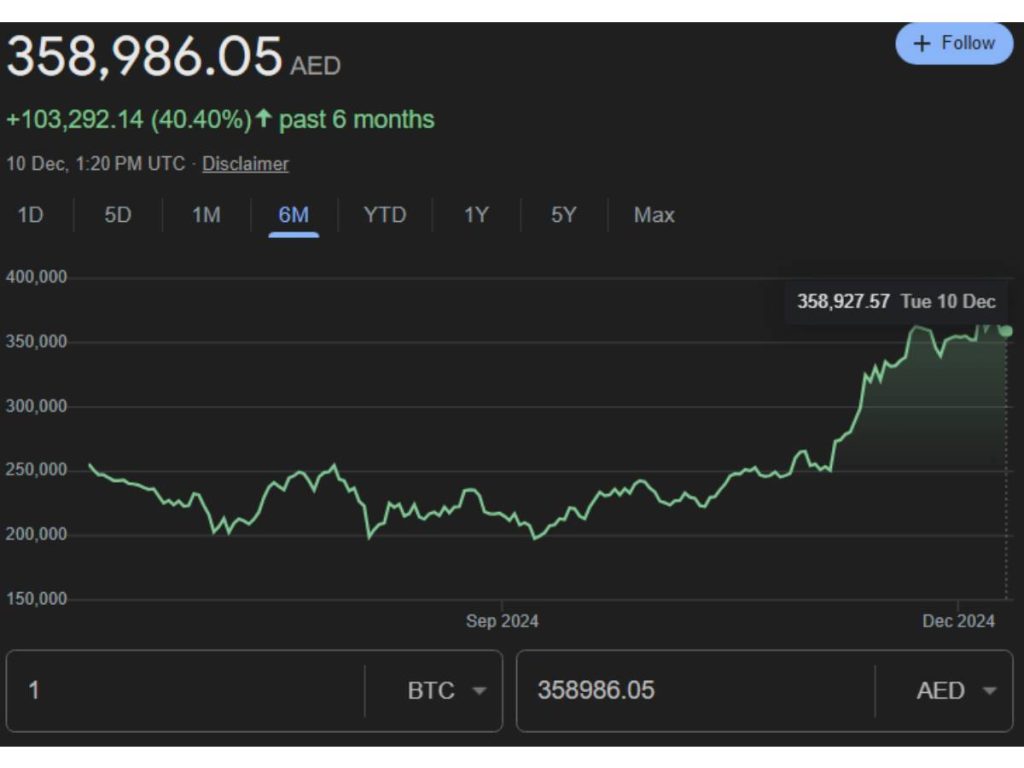
With Bitcoin currently trading above $100,000, according to Barron’s, Eric predicted its price would eventually hit $1 million, citing its capped supply of 21 million coins as a critical driver. “Bitcoin’s scarcity is what makes it incredibly valuable,” he said, contrasting it with commodities like gold, where supply can expand with higher prices.
The role of blockchain
Eric Trump also extolled the potential of blockchain technology to disrupt traditional financial systems. “There’s nothing done in those buildings that can’t be done better on blockchain,” he said, referencing conventional banking institutions. He argued that blockchain’s ability to reduce fees, increase transaction speed, and offer borderless financial solutions positions it as a transformative force.
The sentiment aligns with growing adoption by financial institutions. Companies like Fidelity and Charles Schwab are not only investing in crypto but also launching blockchain-based products, signalling mainstream acceptance of the technology.
Challenges
Despite the optimism, challenges remain. The US regulatory environment for cryptocurrencies has been tumultuous, with lawsuits targeting major crypto firms. Critics argue that the lack of clear guidelines has stifled innovation and pushed companies offshore. “Institutions have waged war against cryptocurrency. Make no mistake about it,” Eric Trump said, promising his father’s administration would reverse this trend.
Moreover, global competition for crypto leadership is intensifying. Countries like the UAE and Singapore have positioned themselves as hubs for blockchain innovation, offering regulatory clarity and tax incentives.
Eric Trump framed the Trump administration’s crypto policy as a broader strategy to lead the “digital revolution.” He emphasised that early adopters of Bitcoin and blockchain would reap the rewards. “Those who embrace this digital revolution, those who embrace digital currency, are going to be the people who win,” he said.
As the world watches the unfolding of the Trump administration’s crypto strategy, industry stakeholders are hopeful yet cautious. With institutional adoption growing and the regulatory landscape evolving, the next four years could mark a pivotal period for cryptocurrencies in the US and beyond.