
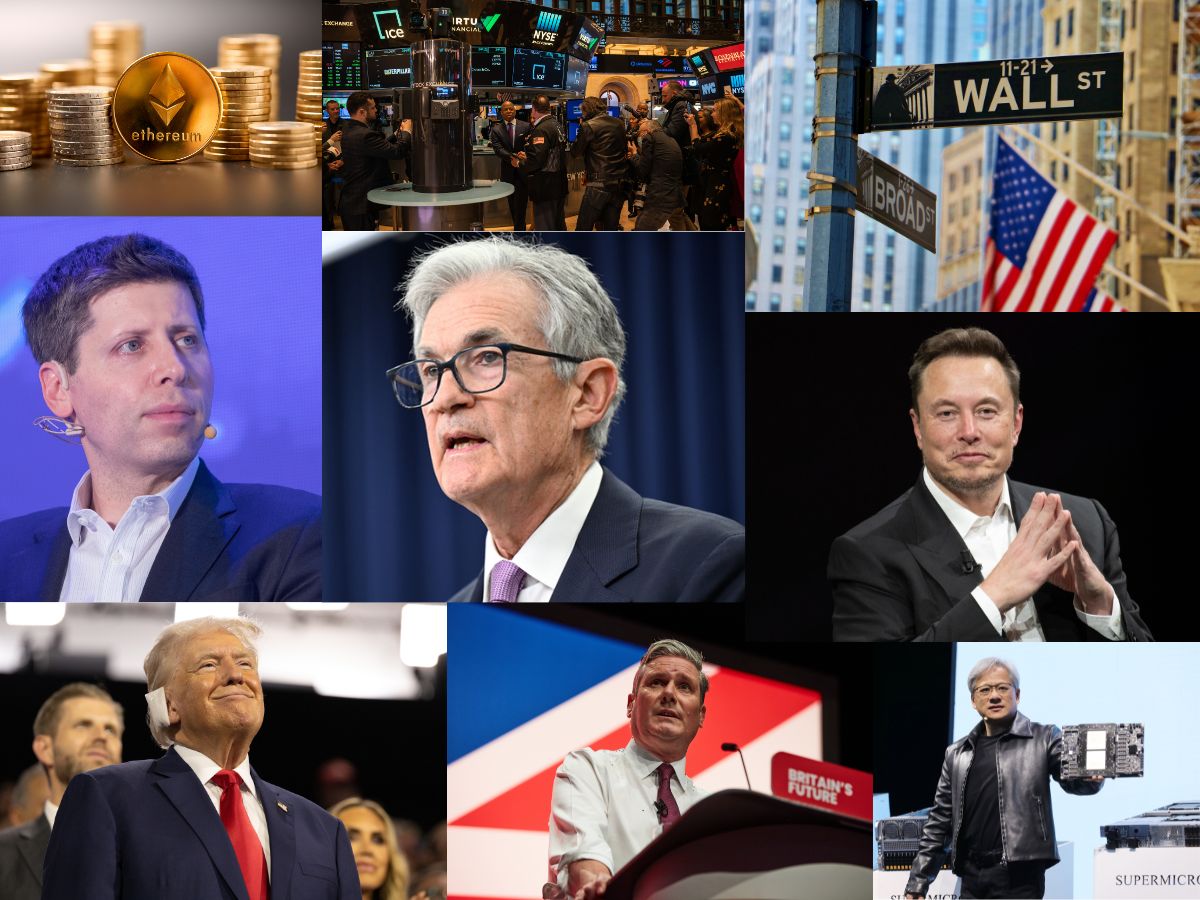
The global economy in 2025 faces pivotal shifts driven by geopolitical tensions, evolving US policies and technological disruptions. Amidst this, the landscape for businesses and investors promises both significant challenges and opportunities. In this context, we look at key macroeconomic trends, geopolitical developments, sectoral shifts and the impact of technological disruptions that will shape global markets this year.
Growth projections
The global economy is expected to experience moderate growth in 2025, with a projected expansion of approximately 3%. While this marks a slight deceleration from previous years, the overall outlook remains resilient. Emerging markets, particularly those in Asia and the Middle East, are set to outpace developed economies, spurred by strong consumer demand, technological advancements and favourable demographic shifts.
“Comprising over 900 issuers across 90 countries, the emerging market debt (EMD) universe is so vast that annual reflections nearly always prove that a single factor cannot drive performance across the entire region,” noted Daniel Moreno, Head of Global Emerging Market Debt, Mirabaud Asset Management. “As active investors, we love dispersion, and we are particularly positive on the opportunity set within credit going into 2025, tailwinds include steady growth, the continued normalisation of inflation, ongoing central bank easing and a significant improvement in credit-rating momentum.”
Echoing Moreno’s sentiments, Valentin Bissat, Senior Strategist Economist, Mirabaud said he sees stable growth in emerging markets: “Emerging markets will post higher growth than developed countries, but the dynamics are identical.”

“Growth should also remain stable compared to 2024. India will continue to post solid growth, but will slow down compared to 2024, with growth closer to its long-term potential. Chinese growth will also slow. Economic expansion will happen in the Middle East and Central Asia.”
– Valentin Bissat
The International Monetary Fund (IMF) has indicated that, despite persistent risks—such as geopolitical tensions and policy shifts—emerging markets like India and Southeast Asia are well-positioned for economic upswing. In contrast, advanced economies such as the US and Europe may experience slower growth, with inflationary pressures possibly constraining their recovery.
Regional growth
The Middle East is set to see a significant growth uptick, primarily driven by the Gulf Cooperation Council (GCC) nations. The UAE and Saudi Arabia are expected to lead this regional expansion, supported by higher oil output and a thriving service sector. These nations will also benefit from increased foreign investment, buoyed by geopolitical stability compared to other regions. However, the situation in the Middle East remains delicate, with risks from geopolitical conflicts potentially hampering growth.
US policy direction under Trump 2.0
The re-election of Donald Trump as US president has major implications for global economic policies. Throughout his first term, Trump’s “America First” policies notably impacted global trade dynamics and his second term promises to carry these policies further, especially in terms of tariffs and tax reforms. A re-escalation of US-China trade tensions is expected, with Trump likely to impose higher tariffs on Chinese imports. This would affect China and ripple through global supply chains, potentially leading to higher costs for businesses worldwide.

However, Trump’s domestic policies may stimulate growth in the US, especially in sectors like defence, manufacturing and infrastructure, due to his focus on deregulation and tax cuts aimed at incentivising corporate investment. While US growth may surge, the global impact will be mixed. Inflationary pressures in the US will likely rise, putting strain on the Federal Reserve’s ability to cut rates. The Fed is expected to keep interest rates relatively high to combat inflation while continuing to adjust policy in response to economic signals.
“Outlook calls are always notoriously tricky to make, and given markets are in ‘wait and see’ mode ahead of Trump taking office again, predictions are even harder this year,” said Andrew Lake, Head of Fixed Income at Mirabaud Asset Management. “The first 60 days or so of Trump’s presidency should set a clearer tone for the rest of 2025, but we can still make some predictions for fixed income as things stand.”
Foreign policy and trade
The US administration is expected to prioritise trade protectionism, aiming to strengthen domestic industries through tariffs. As a result, countries like China, the EU, and others in the global trade network will face higher barriers to accessing US markets. While Trump may soften some of his rhetoric, the uncertainty surrounding US trade policies could increase volatility in global markets as countries react with their own tariffs or trade restrictions.
“Tariffs are the big unknown. Trump’s proposed cabinet leans hawkish on the topic, so we expect the threat of them to be used as a powerful negotiating tool,” Lake explained. He contemplates a scenario where risks do not materialise fully: “The big surprise could be that the threat doesn’t turn into reality, or that tariffs are rolled out in a more measured manner than headlines suggest.”
Geopolitical risks
Emerging markets are expected to continue outperforming developed economies in 2025, driven by structural growth factors and technological progress. India, Southeast Asia and parts of Africa are expected to benefit from robust demographic trends, with young, expanding populations creating a rising middle class. Additionally, markets like Vietnam and the Philippines are capitalising on economic reforms and foreign direct investment (FDI), while the UAE and Saudi Arabia are set to leverage their oil wealth to drive diversification efforts.
“If the question is about economic growth, then, yes, I think emerging economies will continue to outpace developed economies,” said Paul Jackson, Global Head of Asset Allocation Research, Invesco. “Even China, where GDP growth is much lower than it was 10-15 years ago, still enjoys GDP growth that is twice the rate seen in the US.”

However, the trade war between the US and China remains a key risk for emerging markets. The threat of high tariffs, especially from the Trump administration, looms large. With China already experiencing slow economic growth, further tariffs could exacerbate its struggles, affecting global supply chains that rely on Chinese production. This dynamic is particularly concerning for smaller emerging markets that depend on trade with China.

“Major blocs including the US, China and European Union are seeking to secure supply chains, re-route them via allied countries, or in some cases, repatriate and reinforce strategic industries,” Nannette Hechler-Fayd’herbe, Head of Investment Strategy, Sustainability and Research, CIO EMEA of Lombard Odier, noted.
“Competition between the two is spurring a capital spending boom in defence and green technologies, as well as some duplication and inefficiencies in supply chains.”
Beyond trade, global tensions—including the ongoing conflict in Ukraine and the Middle East—pose significant risks. The US is expected to pursue a ceasefire in Ukraine and possibly reduce its military involvement. However, such moves could destabilise Europe, leaving a gap that Russia and China could fill. For businesses, this means an unpredictable geopolitical environment that could affect energy prices, supply chains and investment flows.
“We expect 2025 to see the United States pursue a cease fire in Ukraine and likely seek to place a greater fiscal burden on Europe, President Trump may use tariffs as a cudgel to coax this spending out of Europe,” said Norman Villamin, Group Chief Strategist at UBP.

“His return should also reshape the geopolitical landscape, potentially also deploying a wider set of economic tools and expanding ‘hard power’ efforts such as expanding the alliance framework built out by his predecessor.”
Technological disruptions
Technological innovations will be a key driver of growth in 2025, with artificial intelligence (AI), quantum computing and blockchain technologies poised to disrupt traditional industries. AI, for example, will continue to revolutionise sectors like finance, healthcare and logistics by automating tasks, improving efficiency and enabling predictive analytics. For businesses, investing in these technologies is no longer optional; it’s essential for remaining competitive.
“AI is one of the most promising sectors expected to crush all market forecast regards the biggest winner in stock markets,” said Vijay Valecha, Chief Investment Officer of Century Financial.

“The sector is distinguished not only because of its importance as a business sector, but because of its prominent role in almost the whole technology sector.” He pointed out that AI earnings reports from key chipmakers in 2024 influenced broader market trends.
– Vijay Valecha
AI and Quantum computing
Companies that are early adopters of AI will have a significant edge. AI’s applications in data analysis, customer service, and supply chain optimisation will allow businesses to streamline operations and reduce costs. Quantum computing, while still emerging, promises to transform industries by solving problems that are beyond the capabilities of classical computers, particularly in fields like cryptography and drug discovery.
“Technology could be the first preference for investors all around the world in 2025, which is evident in the several rounds technology had won in 2024 when they led global stock indices to unprecedented levels,” noted Mohamed Hashad, Chief Market Strategist, Noor Capital. “AI is the one subsector which is expected to grasp the biggest interest in markets.”

Blockchain
Blockchain’s ability to provide transparent and immutable records will continue to redefine sectors like finance, supply chain management, and even healthcare. For businesses, integrating blockchain technology into their operations can improve security, reduce fraud, and enhance operational efficiency.
Supply chain resilience
The pandemic and geopolitical events, such as the Russia-Ukraine war, have underscored the need for businesses to strengthen supply chain resilience. In 2025, companies will continue to adapt by diversifying their supplier networks, shifting production closer to home, and embracing technologies like AI and blockchain to enhance supply chain visibility.
Key strategies to navigate supply chain issues
- Diversification: Businesses will increasingly look to diversify suppliers and sources to reduce reliance on a single country or region.
- Nearshoring and regional sourcing: Shifting production closer to key markets will reduce risks associated with global supply chain disruptions.
- Digitalisation: Leveraging AI, IoT, and blockchain for real-time data on inventory and supply chains will help companies make faster, data-driven decisions, ensuring smoother operations.
Cryptocurrencies and digital assets
In 2025, the cryptocurrency and digital asset space is set to experience regulatory evolution. With the expected pro-crypto stance of the incoming US administration, clear regulatory frameworks will likely emerge, bolstering investor confidence. These developments could facilitate greater adoption of digital assets, attracting institutional interest and driving innovation within the sector.
The Trump administration’s expected support for crypto-friendly legislation will likely lead to clearer rules for digital assets, which could encourage broader market participation. For businesses and investors, this means a more predictable regulatory environment, potentially accelerating the adoption of blockchain and crypto technologies.
“It’s also expected to have more American legislations suggested to support crypto activities based on what the president elect Donald Trump promises to support the sector,” said Valecha, noting existing laws passed by the US Congress in 2024 and potential further steps to clarify rules for digital assets.
Inflation trends
Inflation, which has been a central concern for central banks globally, is expected to stabilise in 2025, though it may remain elevated in certain regions, particularly the US. The Federal Reserve will likely pause interest rate cuts to combat inflation, affecting asset prices and investment strategies.
“Donald Trump’s programme combines positive elements for equity markets and economic growth (fiscal policy) with elements that could boost inflation and limit the Fed’s monetary easing (immigration policy, tariffs),” noted Bissat. He expects volatility and pressure on US yields. “Markets are therefore likely to be highly volatile. US yields will remain under pressure (higher term premium, stable or slightly falling rate expectations from current levels), although we do not expect them to rise significantly from here.”
Interest rates
The Fed’s policies will significantly impact bond yields and equities. While other central banks, particularly in Europe, may cut rates to stimulate growth, the US is expected to maintain relatively high rates, creating a divergence in monetary policies across regions.
“We have already begun to see rate cuts globally from most central banks, with the Reserve Bank of Australia the odd one out, keeping rates on hold and unlikely to cut until mid-2025,” explained Josh Gilbert, Market Analyst, eToro.

“Inflation is moderating, and therefore, central banks are likely to keep their dovish approach in 2025. There are some concerns that a Trump presidency may reignite inflation, but for now, the Federal Reserve will remain data-dependent and are unlikely to focus on politics.”
– Josh Gilbert
Inflation outlook
Globally, inflation is expected to decline, but with potential regional variations. Higher tariffs and domestic policy changes in the US could push inflation upwards, while Europe may experience lower inflation due to weaker economic growth.
2025 promises to be a year of transformation. From geopolitical shifts, economic policy changes, technological breakthroughs, and evolving consumer trends, businesses and investors must stay agile and informed. The key to success will lie in navigating these changes strategically, making informed decisions and capitalising on emerging opportunities in a rapidly changing world.