Geopolitical risks are exerting significant pressure on global financial markets, with emerging market assets facing the sharpest impact, according to a blog published by the International Monetary Fund (IMF).
The IMF report finds that stock markets tend to fall by an average of 1 percentage point globally in months marked by heightened geopolitical risk. For emerging market economies, the drop averages 2.5 percentage points, rising to 5 percentage points during international military conflicts—the most disruptive category of geopolitical events.
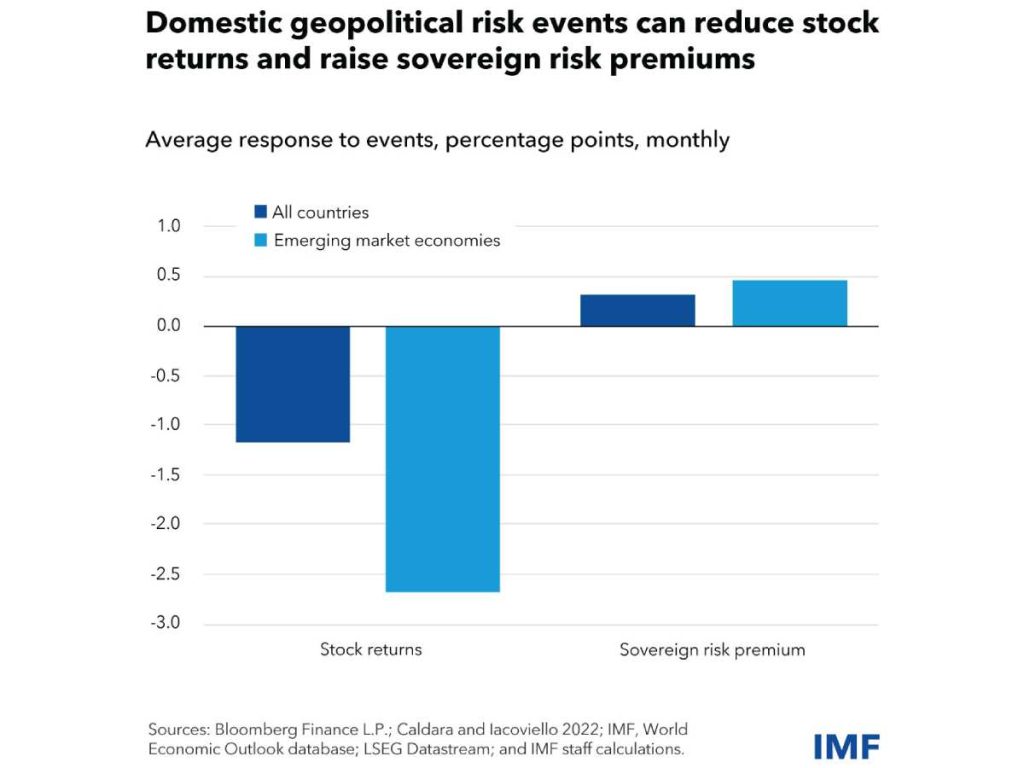
Government borrowing costs also increase, with sovereign credit default swap (CDS) spreads rising by an average of 30 basis points in advanced economies and 45 basis points in emerging markets following a major geopolitical event. The increase can be up to four times higher in some emerging markets with high debt and low reserves.
The IMF defines geopolitical shocks as wars, diplomatic rifts, or terrorism—events that disrupt cross-border trade, investment, and financial flows. These shocks introduce prolonged uncertainty, making it difficult for investors to price risk, often resulting in sharp asset repricing.
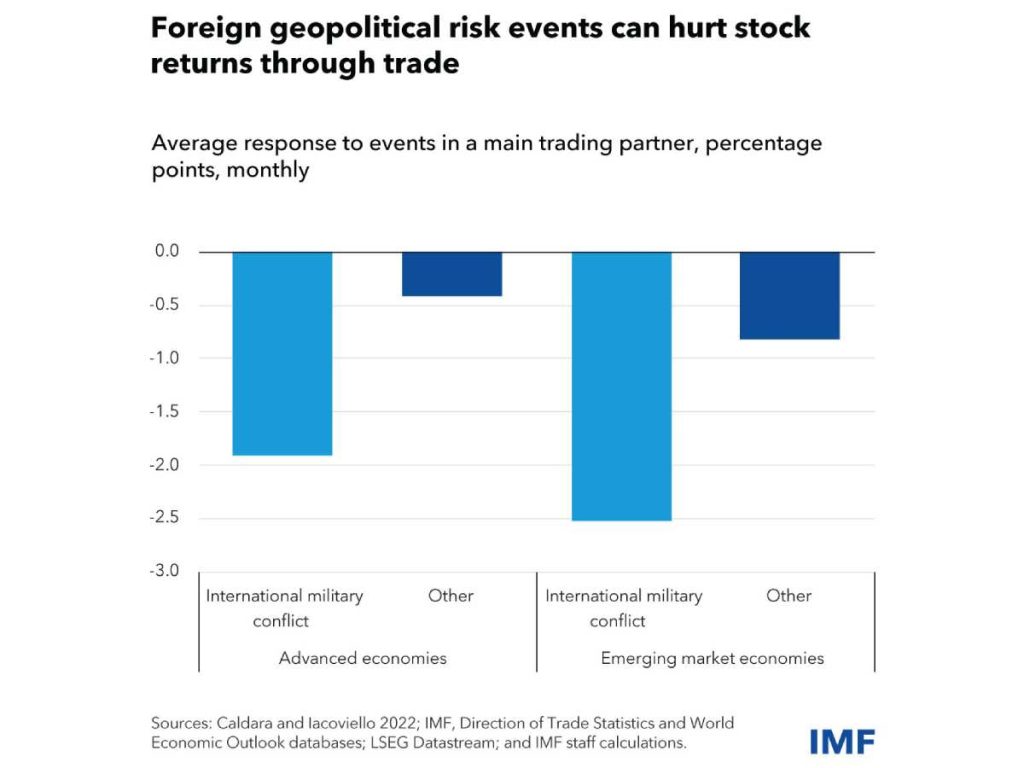
The report also highlights significant cross-border contagion effects. For instance, when a major trading partner is involved in a conflict, an economy’s stock valuations fall by an average of 2.5%. Sovereign risk premiums also rise, with the impact more pronounced in economies with weaker fiscal buffers or institutional frameworks.
The IMF warns that the indirect effects of geopolitical shocks—such as reduced bank lending and higher redemption risk for investment funds—can further strain the financial system. It calls on financial institutions and regulators to integrate geopolitical risk into stress testing and risk management frameworks. Institutions should also maintain adequate capital and liquidity buffers to withstand shocks while emerging and developing economies are encouraged to deepen domestic financial markets and build fiscal and reserve buffers.
The findings come amid persistent geopolitical tensions globally, including conflicts in Europe, the Middle East, and broader US-China strategic competition, all of which continue to shape investor sentiment and asset pricing.