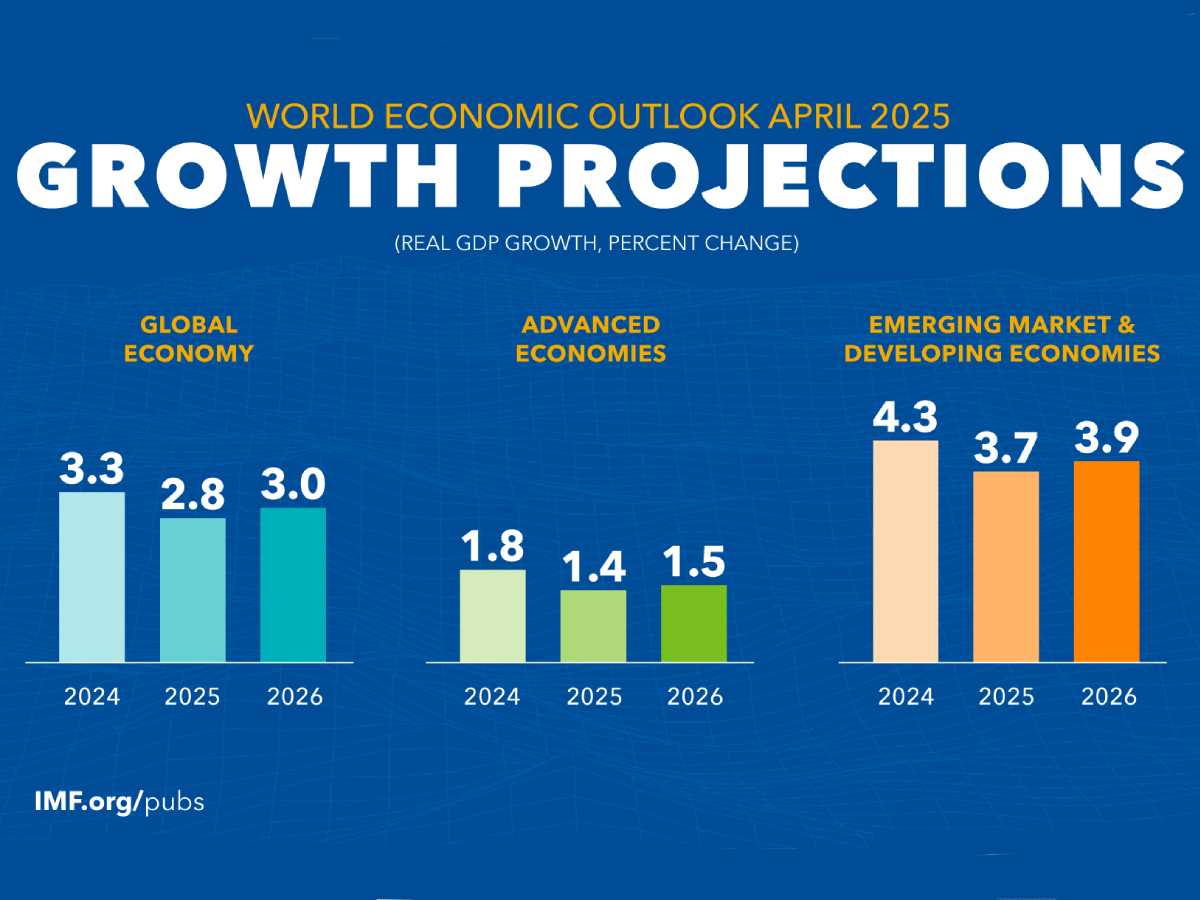
The International Monetary Fund has revised its global growth forecast for 2025 down to 2.8%, citing sweeping US tariffs and rising trade tensions as key drivers of a broader economic slowdown.
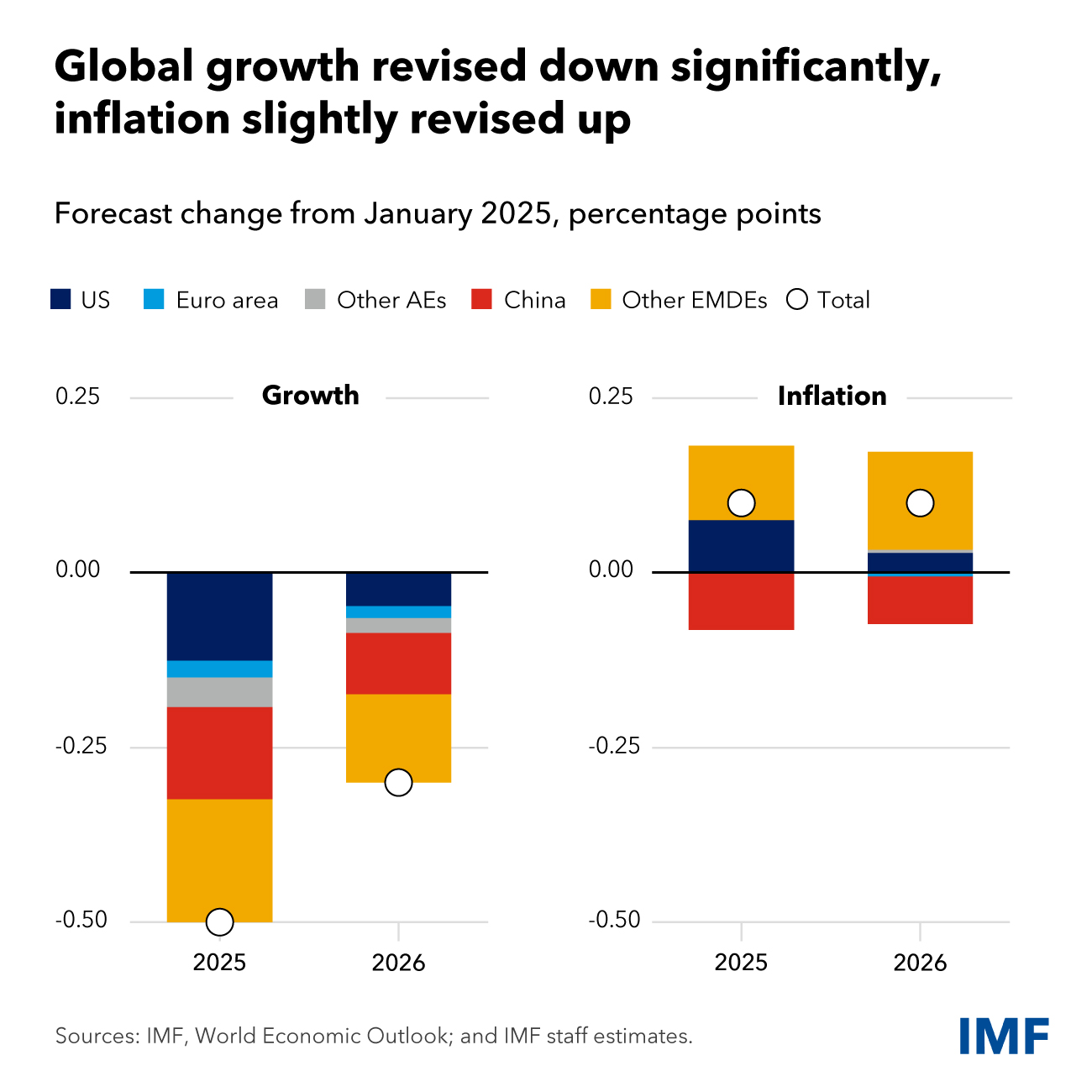
In its April 2025 World Economic Outlook, the IMF said growth is expected to remain subdued through 2026, with projections now standing at 3.0%. The latest figures mark a 0.8 percentage point downgrade from January estimates and fall well short of the 3.7% average recorded between 2000 and 2019.
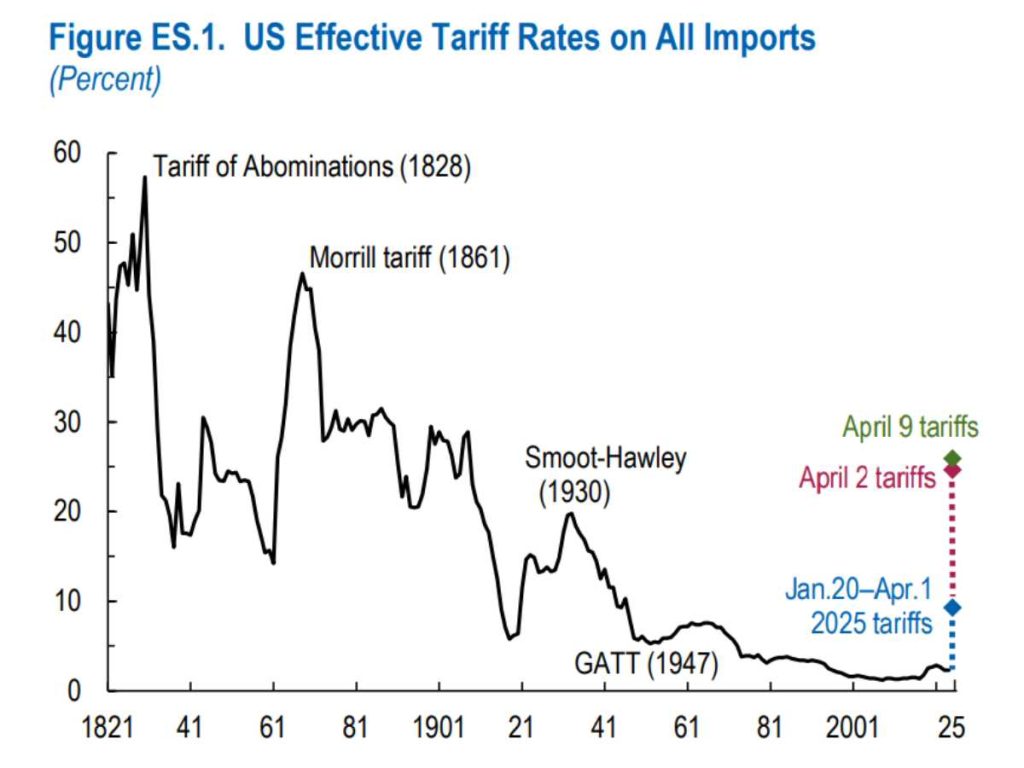
The downgrade follows the announcement of near-universal US tariffs on April 2, which pushed effective rates to levels not seen since the 1930s. These include a 145% tariff on Chinese goods and broad-based levies on auto imports and raw materials. Trading partners have responded with retaliatory measures, adding to policy uncertainty and dampening investor confidence.
The IMF described the global environment as highly fluid, opting for a “reference forecast” rather than a traditional baseline due to the difficulty of projecting in the current landscape.
Advanced economies are forecast to grow at 1.4% in 2025 while emerging markets and developing economies are projected to expand by 3.7%. The US economy is expected to grow at 1.8%, down 0.9 percentage points from earlier forecasts, citing trade frictions and weaker demand. Growth in the euro area is set to slow to 0.8%.
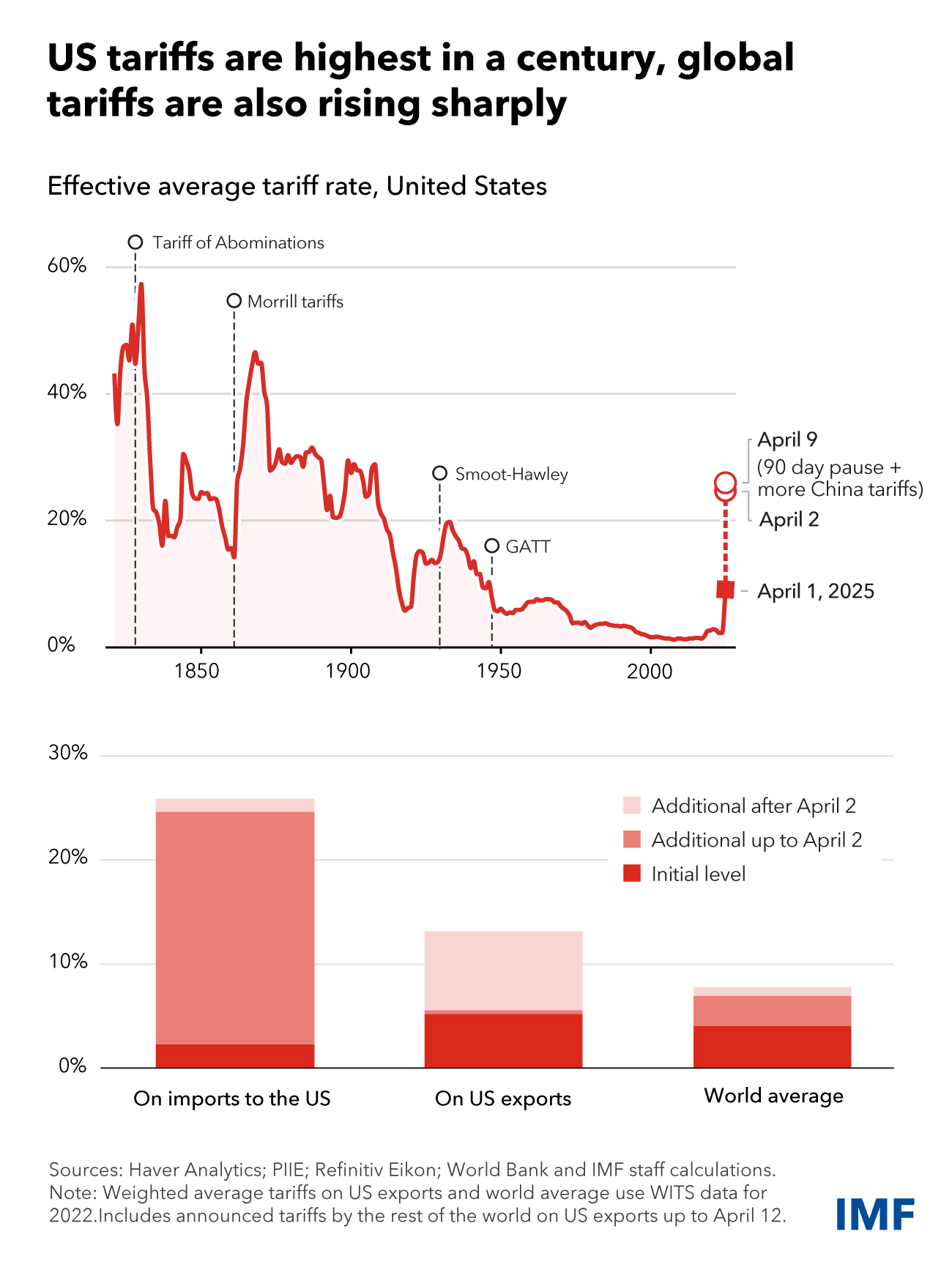
Inflation is expected to ease but at a slower pace than previously anticipated. Global headline inflation is now forecast at 4.3% in 2025 and 3.6% in 2026, with upward revisions for advanced economies.
The IMF flagged significant downside risks, including further tariff escalation, asset repricing, currency volatility, and reduced resilience to future shocks. It warned that financial instability could spread, particularly in countries already facing high debt or external vulnerabilities.
In response, the Fund urged governments to coordinate trade policies, strengthen fiscal frameworks, and rebuild monetary policy buffers. Central banks should remain focused on inflation while using targeted tools to prevent financial instability, it said.
The IMF also highlighted the impact of demographic shifts, declining labour mobility, and constrained development financing on medium-term growth, particularly for low-income economies.
The Fund concluded that stability will depend on restoring global cooperation and tackling domestic imbalances, as trade and geopolitical risks continue to shape the economic outlook.