

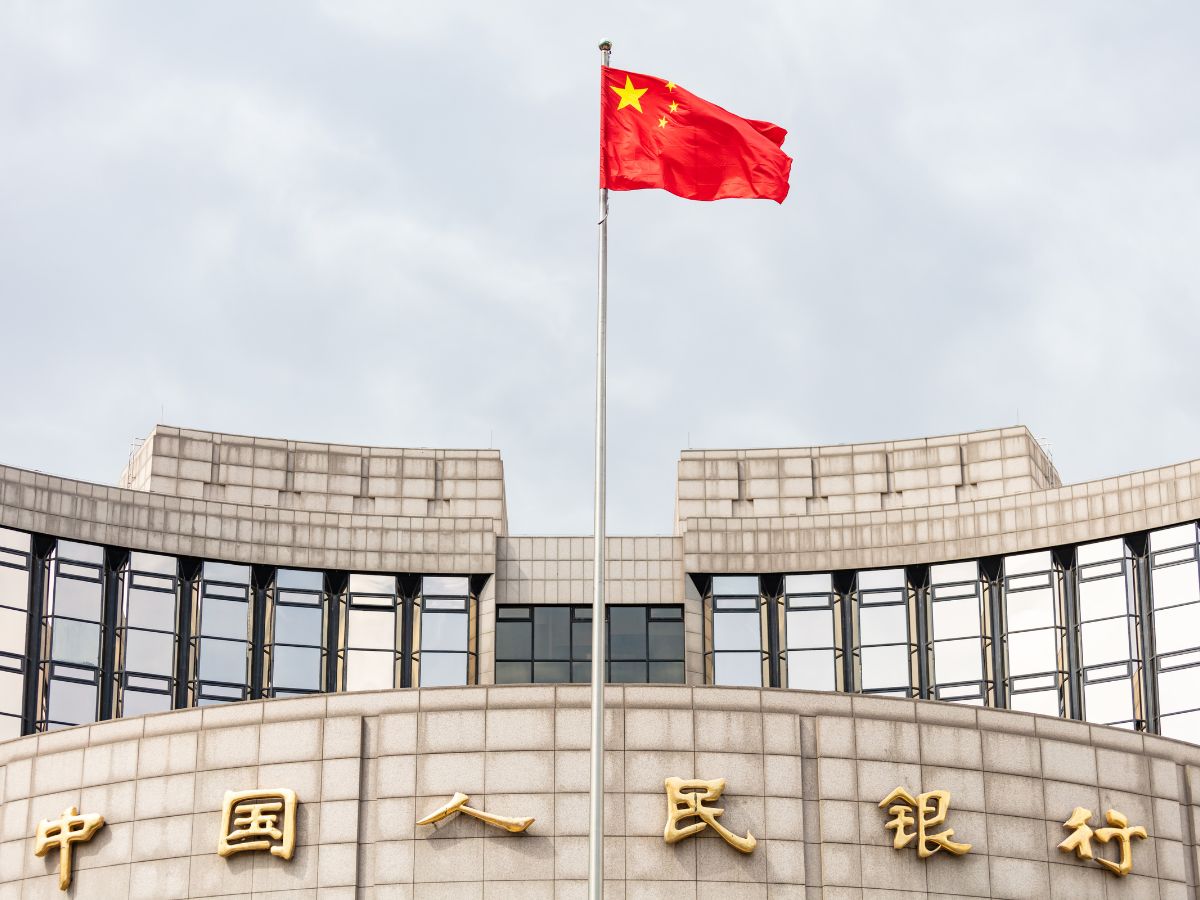
China has surprised global markets. The country’s bank announced Monday morning it will lower the interest rate on seven-day reverse repos from 1.8% to 1.7% in a move to stimulate growth in the world’s second-largest economy.
The move aims to strengthen counter-cyclical adjustments to better support the real economy, the People’s Bank of China (PBOC) said in an online statement.
A reverse repo is a process in which the central bank purchases securities from commercial banks through bidding, with an agreement to sell them back in the future. The PBOC conducted 58.2 billion yuan (about $8.16 billion) of seven-day reverse repos at an interest rate of 1.7% on Monday.
Shortly after announcing the reduction in the seven-day reverse repo rate, China cut benchmark lending rates by the same margin at the monthly fixing. The one-year loan prime rate (LPR) was reduced from 3.45% to 3.35%, and the five-year LPR from 3.95% to 3.85%.
The cuts follow weaker-than-expected economic data for the second quarter and a key leadership meeting. Moreover, the potential deflation, a prolonged property crisis, increasing debt, and weak consumer and business sentiment have all challenged China’s economic outlook.
The official Xinhua news agency reported that the “decisive” rate cut underscores the PBOC’s commitment to supporting economic recovery, aligning with the plenum’s goals for this year’s growth target.