The UAE and Mauritius have finalised a Comprehensive Economic Partnership Agreement (CEPA), marking the UAE’s first agreement with an African nation. This agreement will boost trade and investment flows while promoting bilateral collaboration within the private sector.
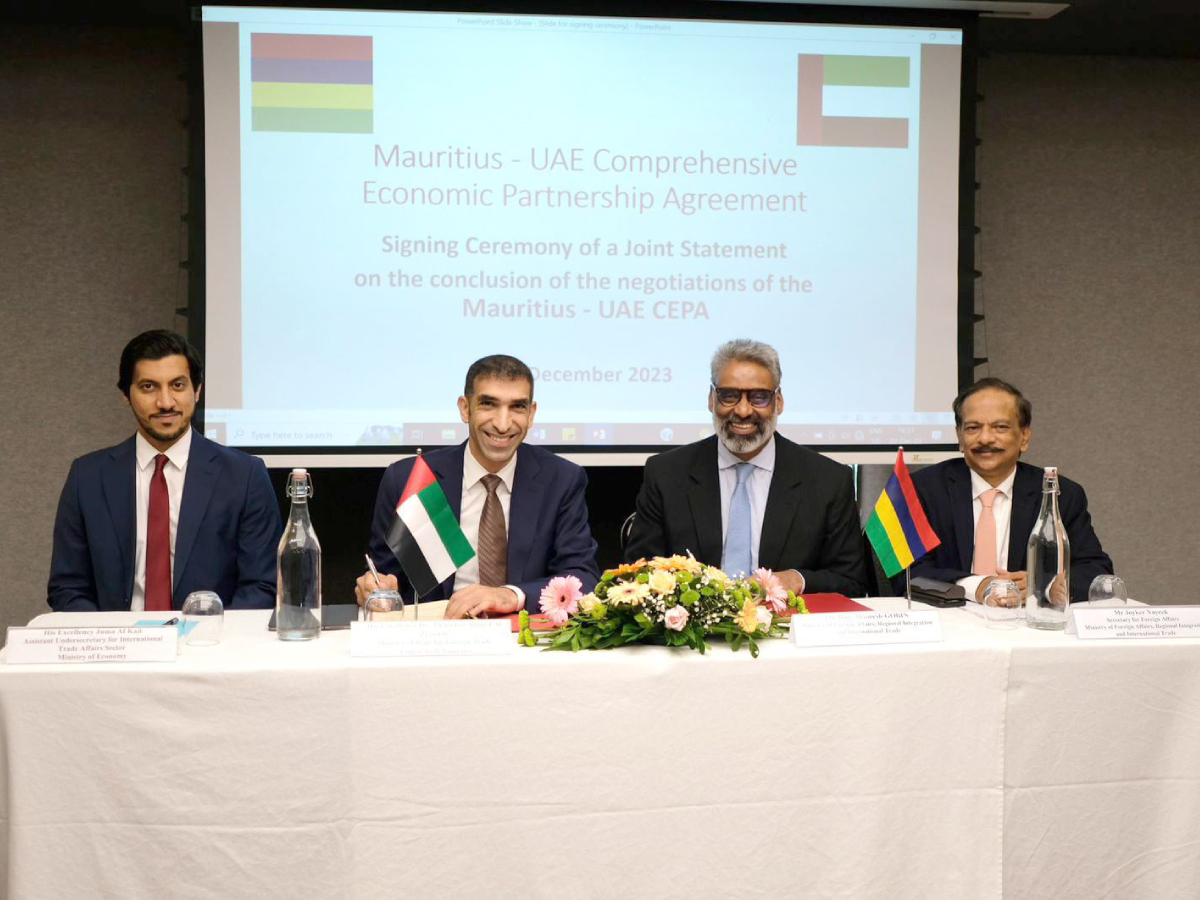
The completion of negotiations, occurring merely four months after the initial round of talks, was affirmed through a joint statement signed in Mauritius by Dr Thani bin Ahmed Al Zeyoudi, UAE’s Minister of State for Foreign Trade, and Maneesh Gobin, Mauritius’ Minister of Foreign Affairs, Regional Integration, and International Trade.
Establishing nearly fifty years of diplomatic relations, including the recent inauguration of the Mauritius Economic Development Board’s Dubai office, the CEPA will encompass Trade in Goods and Services and Investment Facilitation. Upon implementation, it is expected to accelerate non-oil bilateral trade between the UAE and Mauritius, which amounted to $63.1 million in the first half of 2023, with opportunities primarily identified in the chemicals, metals, and petroleum products sectors.
“Strategically located in the vital Indian Ocean, and with a growth-orientated economic vision that matches our own, Mauritius is a welcome and valued partner in the UAE’s CEPA programme and our efforts to maximise bilateral opportunities borne from open, rules-based trade,” said Al Zeyoudi. “With the potential to add fully 1% to the Mauritius economy by 2031 and enhance the UAE’s GDP by 1.2% in the same period, a UAE-Mauritius Comprehensive Economic Partnership Agreement offers considerable benefits for us both – it will do so by not only boosting trade flows, but creating new pathways for strategic investment, private-sector and academic collaboration, and SME support.”
Mauritius, identified as one of Africa’s promising economies, achieved an 8.5% GDP growth in 2022, marking its fastest growth in 35 years. Its services sector, constituting 67% of the nation’s GDP, presents substantial prospects for UAE enterprises specialising in telecommunications, information services, travel, transport, and financial services, seeking expansion in the African region. The agreement, designed with specific criteria for targeted investment identification and facilitation, is expected to attract Foreign Direct Investment (FDI) into sectors like fintech, healthcare, and tourism.
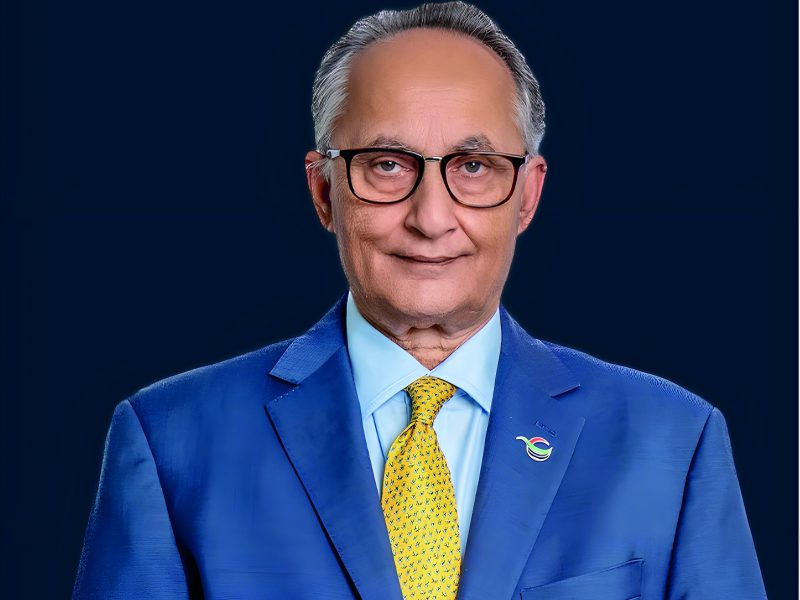
Maneesh Gobin, Minister of Foreign Affairs, Regional Integration and International Trade of Mauritius, said, “It is expected that the CEPA will further improve the business climate and remove any impediments to trade in goods, trade in services and investment flows.”
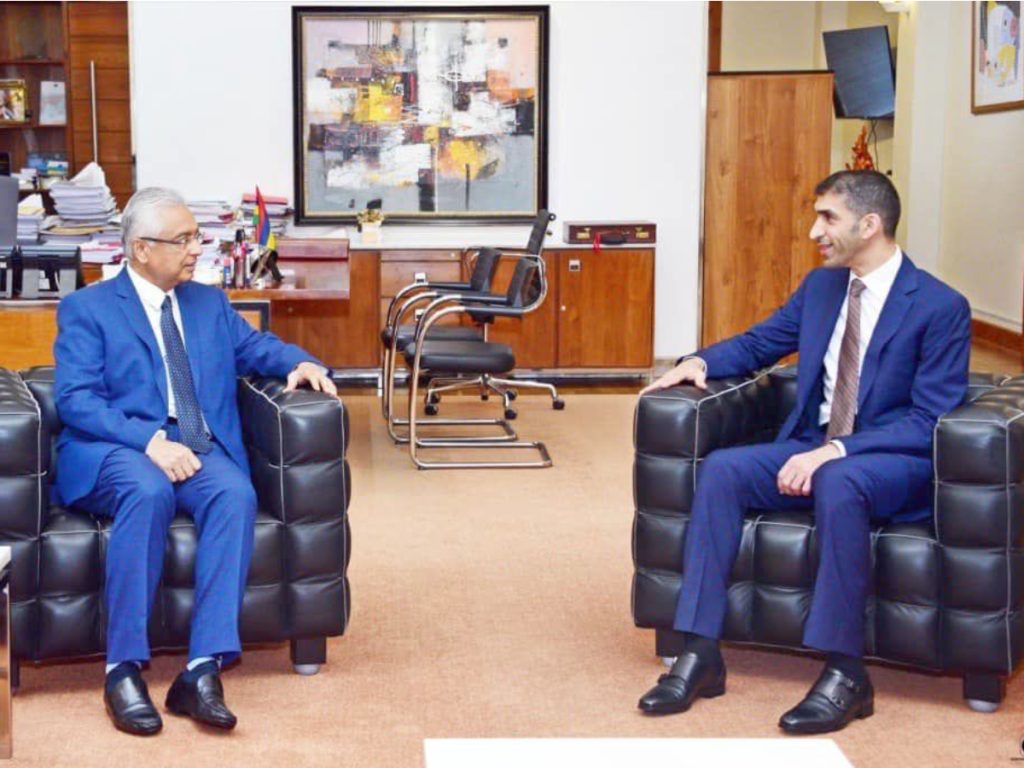
After signing the joint statement for CEPA, Al Zeyoudi engaged with Hemraj Ramnial, Chairman of the Mauritius Economic Development Board, and subsequently met with Prime Minister Pravind Kumar Jugnauth to discuss the opportunities generated by this bilateral agreement. Discussions also extended to Louis Steven Obeegado, Deputy Prime Minister, Minister of Housing and Land Use Planning, and Minister of Tourism.
The UAE’s CEPA program constitutes a fundamental component of the nation’s growth strategy, aiming for Dh4 trillion ($1.8 trillion) in total trade value by 2031 and doubling the economy by 2030. This agreement adds to a series of signed deals under the program across the Middle East, Southeast Asia, Eastern Europe, and Latin America—encompassing nearly a quarter of the population. The UAE-Mauritius CEPA will come into effect after successful ratification by both parties.