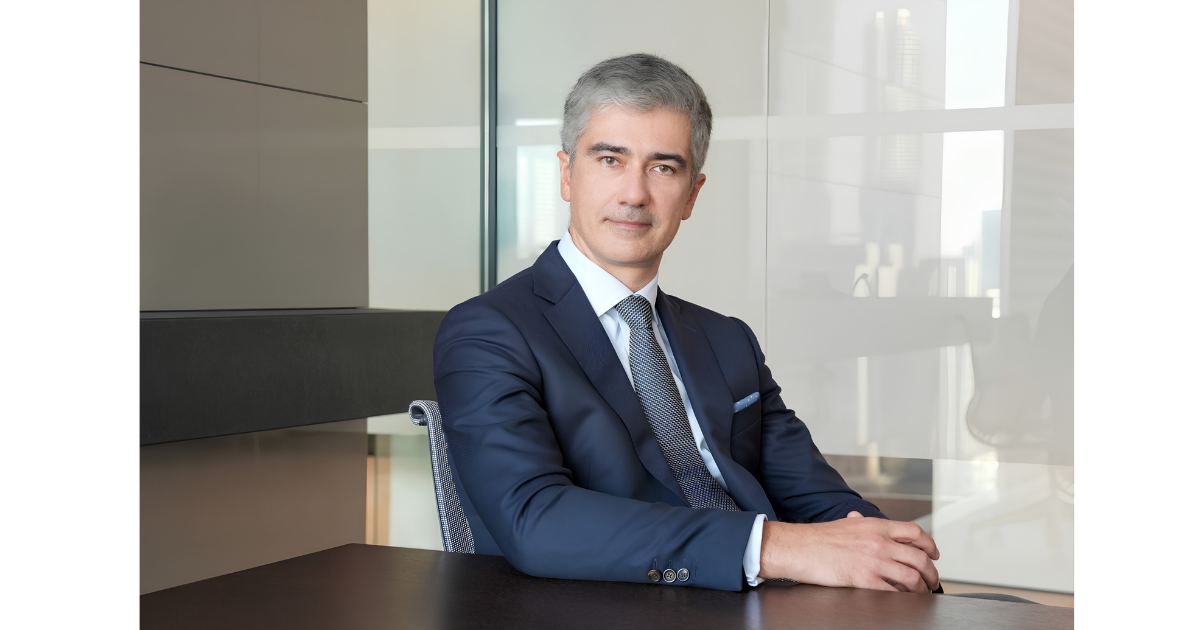
Dubai’s rise as a global wealth hub has been described in many ways: momentous, ambitious, and even inevitability. But for Andrey Chuprin, Senior Executive Officer at The Ultima World, the more accurate explanation is structural.
In Chuprin’s view, serious capital does not relocate for headlines. It relocates for systems, governance, clarity, ecosystem depth, and the ability to operate across borders without constant friction. These aren’t branding statements; they are operating requirements that modern wealth platforms must now mirror.
“Markets can be volatile. Policies can shift. But investors do not compromise on structure,” he says. “When capital is international, the first question is always the same: Can I operate here with predictability and discipline?,” according to the Senior Executive Officer.
From Opportunity to Operating Environment
Chuprin believes the discourse surrounding Dubai has entered a more mature phase. What was once framed as an “opportunity story” is now better understood as an operating environment. This shift has necessitated a new breed of wealth management, one that moves away from traditional, siloed advice toward integrated, platform-led ecosystems.
“Dubai is moving beyond being a place to do business,” he notes. “It is becoming a place to base decisions. That represents a fundamental shift in trust, and it requires a sophisticated infrastructure to manage that decision-making process.”
This trust is backed by staggering data. The Dubai International Financial Centre (DIFC) recently reported landmark 2025 results, with active companies surging to 8,844: a 28% year-on-year growth. Revenues hit a record AED 2.13B, underscoring that the “structural advantage” is generating tangible economic depth.
“A wealth hub is not defined by one advantage,” he adds. “It is defined by the ‘full stack.’ At The Ultima World, we view wealth management the same way, it’s about how regulation, technology, and talent work together seamlessly.”
Why Friction Matters More than Most Admit
A recurring theme in Chuprin’s assessment is the rising cost of “friction” in legacy jurisdictions. As global compliance rules tighten, notably with the operational launch of the EU’s AMLA in late 2025, the practical result is often opaque timelines and mounting documentation for cross-border capital.
“Investors are not allergic to regulation; they are allergic to uncertainty,” he says. “This is why we’ve focused so heavily on the structural side of wealth management. When a jurisdiction has clear frameworks, and a platform provides the transparency to navigate them, friction becomes manageable.”
In FY25 alone, 2,525 new companies registered in the DIFC, a 39% increase compared to the previous year. To Andrey, these aren’t just statistics; they are votes of confidence in a system that prioritizes manageable outcomes, a philosophy that sits at the heart of The Ultima World’s operational model.
“The differentiator in 2026 is no longer just access; it is the quality of the platform used to manage that access.”
Ecosystems Over Individuals
Chuprin reframes the “millionaire migration” narrative, noting that lifestyle is merely the hook, structure is the stay. The DIFC is now home to over 500 wealth and asset management firms, including a landmark milestone of over 100 hedge funds now operating within the center.
“Investors move when they can build a durable platform for decisions,” he says. This durability is found in “ecosystem density”, the presence of specialist firms and institutional players that create a sophisticated financial neighborhood. For Chuprin, the role of a wealth management platform is to act as the gateway to this density, providing the institutional-grade discipline that private investors now expect.
The Move Toward Institutional Discipline
As we move through 2026, Chuprin believes the investor mindset has shifted from product-led thinking to process-led thinking.
“The new expectation is not ‘more options,’ it is better decision support,” he explains. “Private wealth is demanding the same level of resilience and communication once reserved for major institutions. They want to understand exactly what happens when conditions change, which requires a highly disciplined, tech-enabled approach to management.”
The Credibility Competition
Asked where Dubai goes from here, Chuprin doesn’t frame it as a competition for attention, but as a competition for credibility.
“The next phase is about being the most workable hub. The hub where serious capital can operate with confidence.” That confidence, he concludes, isn’t built on a single announcement. It is the result of consistency: clear regulation, a deepening ecosystem, and the right tools, like those developed at The Ultima World, to engage with both.
“That,” he says, “is what makes an advantage structural. It’s about building systems, both at a jurisdictional level and a platform level, that don’t just survive change but thrive because of it.”
This material does not constitute investment advice or a recommendation to invest.
All investments involve risk, including the possible loss of principal. Past performance is not indicative of future results. Clients should carefully review all relevant product documentation and consider their individual financial circumstances and risk tolerance before making any investment decision.
The Ultima World (DIFC) Limited (also trading as The Ultima World. Wealth Management Platform) is authorised and regulated by the Dubai Financial Services Authority (DFSA) with DIFC license number CL3568, DFSA reference number F004980.