
Startups in the Middle East and North Africa secured $289 million across 44 deals in May 2025, marking a 25% increase over April and a 2% rise year-on-year, according to data compiled by Wamda.
Egypt led regional funding, led by Nawy’s $75 million round, its largest in recent quarters. Seven additional Egyptian startups collectively raised $50 million, marking the country’s highest activity since July 2024.
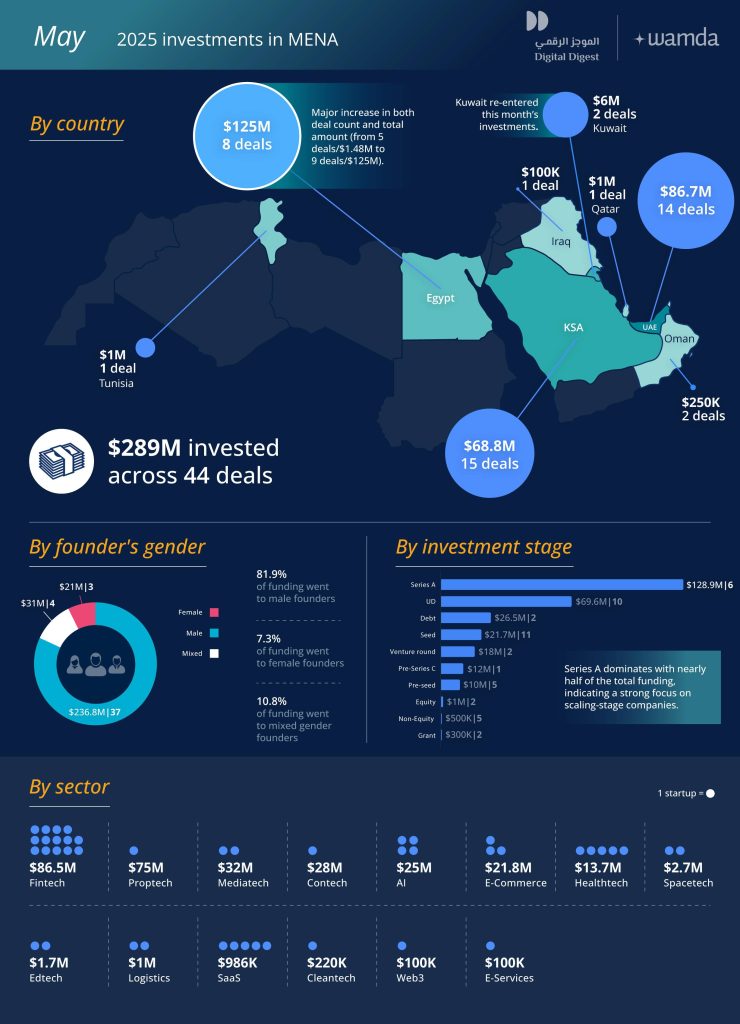
The UAE ranked second, with $86.7 million raised across 14 deals. Saudi Arabia followed closely, recording $69 million from 15 deals. Kuwait, typically underrepresented in monthly reports, took fourth place, with two deals totalling $6 million.
Debt financing accounted for only 9% of the overall volume, with most capital allocated to equity transactions.
Despite regional announcements supporting artificial intelligence—including during US President Trump’s visit to the Gulf with US tech executives—AI startups raised only $25 million across two deals, indicating a gap between policy momentum and private sector funding.
Fintech remained the leading sector, pulling in $86.5 million from 14 rounds. Proptech followed, lifted by the Nawy deal. Mediatech recorded $32 million, while construction tech firm WakeCap secured $28 million.
Early-stage deals dominated the month’s activity. Only one pre-Series C round was recorded at $12 million, with seed and Series A rounds making up $161 million of the total.
B2B-focused startups received the bulk of investor attention, raising $157 million across 29 deals. Hybrid B2B/B2C firms secured $79 million, while B2C startups lagged with just $53 million from nine deals.
The report also highlighted a persistent gender funding gap. Male-founded startups captured 82% of capital raised. Female-founded ventures drew 7%, while mixed-gender founding teams attracted 11%.
The numbers suggest that while deal activity is rebounding, significant disparities in stage, sector, and founder demographics continue to define the regional venture landscape.