
The US Federal Reserve is poised to cut interest rates by 25 basis points at its next policy meeting in September—or so investors and analysts expect.
In June, the Fed kept interest rates unchanged for the seventh time in a row, maintaining them at 5.25% and 5.5%, the highest in 23 years, for over four. However, the latest inflation data, showing headline consumer price inflation dropping below 3% for the first time since 2021 has driven up investors’ hopes of an approaching rate cut. Other central banks, including the European Central Bank, have already announced rate cuts, in advance of a similar move coming from Washington.
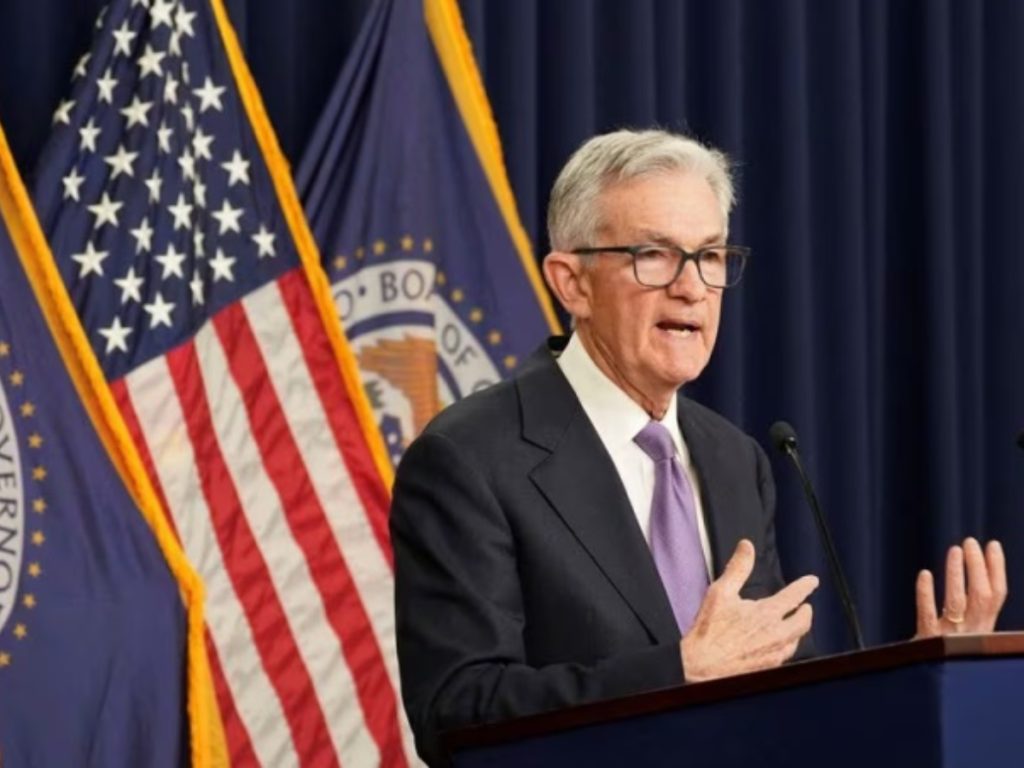
“The time has come for policy to adjust,” said Fed Chairman Jerome Powell, during an August conference in Jackson Hole, Wyoming. After a year of record-high rates, what can be expected from the new economic landscape? Experts weighed in.
How much will the Fed cut rates?
Rate expectations are volatile. At the start of the year, investors were anticipating at least three rate cuts. Today, the majority agree on a higher likelihood of there being two, or even just one.
In terms of the amount the Fed could cut rates by, experts are divided. The CME Group’s FedWatch Tool indicated that 59% expect a 25-basis-point cut, while 41% anticipate a half-point reduction. The 50-basis points cut camp is linked to the results of the latest Job Openings and Labor Turnover Survey (JOLTS), which revealed the lowest number of job openings in over three years. However, many economists argue that a smaller cut would be preferable, as a larger cut could signal unnecessary urgency.


“While the Fed is likely to reduce rates to manage inflation, a 25-basis-point cut is seen as more appropriate,” said John Plassard, Senior Investment Specialist at Mirabaud. “A deeper, 50-basis-point cut could signal heightened economic risk, potentially causing investor anxiety by suggesting the Fed sees a more severe economic downturn than current data reflects.”
Without further guidance from Powell on the speed and size of the expected cuts, investors will closely watch economic data to gauge the Fed’s approach to balancing economic growth and inflation control.
“Is there room for a 50 bps cut from the Fed this year? For sure!”
Altaf Kassam of SSGA
“The Fed has the difficult task of balancing multiple factors including inflation data, labour market data and the lagged impact of previous rate hikes,” added Daniel Murray, Deputy CIO & Global Head of Research at EFG International. Discussing the prediction that the Fed could cut rates ten times by the end of 2025, Murray stresses this is “inconsistent with core expectations of a soft landing”, pointing towards the higher likelihood of a more cautious approach.
“Is there room for a 50 bps cut from the Fed this year? For sure!” said Altaf Kassam, CFA, Managing Director and EMEA Head of Investment Strategy & Research at State Street Global Advisors (SSGA). “In fact, depending on how conditions evolve, there may even be room for two! However, we do not think one needs to happen in September.
“In short, we are not in panic mode. Measured cuts seem appropriate, and our base case is for the Fed Funds Rate to be between 3.0%-3.25% by the end of 2025, so 3 cuts this year from the Fed is still a reasonable outcome.”
Impact on corporate earnings
The possibility of lowering interest rates has brought forth investor excitement, and the hopes that history will repeat itself and US equity markets will deliver the average 11% returns that they have delivered since the early 1950s. However, the context of each Fed cut matters.
It all depends on the economy. A Fed cutting out of choice—and not a necessity—could provide “the next boost to equities”, analysts from the Bank of America (BofA) found. This is because lower rates would lead to lower US 10-year real bond yields, the risk-free discount rate, without a meaningful drag from rising equity risk premia. However, a recession or a weakening in the US labour market would likely be accompanied by equity market weakness, “as the boost from a lower risk-free discount rate is outweighed by the drag from rising risk premia in response to increasing hard-landing risks”, analysts said.
A Fed cutting out of choice—and not a necessity—could provide “the next boost to equities”.
BofA
“If labour markets collapse suddenly and the Fed has to implement emergency rate cuts, that would typically be a poor environment for risky assets,” Murray explained. “If the Fed is cutting because of gentle slowdowns in inflation and the labour market that would be a reasonable backdrop for equities. Investors therefore need to pay attention not only to whether monetary policy is being eased but also the reasons for doing so.”
The starting valuation of Fed rate cuts is also important. Using data from Prof. Robert Shiller, when the Fed cuts rates and valuations are in excess of 20x earnings (as they are currently), returns average flat to negative on a 3- to 12-month horizon. Secondly, looking at aggregate US corporate profits from the Bureau of Economic Analysis, corporate profits have, on average declined prior to a rate-cutting cycle during recessions. This has led to a more than 10% rebound in corporate profits once the Fed begins cutting.
In contrast, when no official recession has taken place, corporate profits had been growing strongly into the first rate cut with corporate profit ‘recovery’ averaging 3%.


“With US equities trading at elevated valuations, equity investors are increasingly relying on meaningful earnings upgrade cycle to already elevated expectations about corporate profit growth looking into 2025 to drive returns looking ahead,” said Norman Villamin, Group Chief Strategist of Union Bancaire Privée (UBP).
“However, using history as our guide, the absence of a post-recession earnings recovery cycle makes this catalyst to the next leg of equity returns unlikely, leaving investors exposed to potential disappointment surrounding earnings expectations moving into 2025.”
Where to invest during a rate-cutting cycle
Given the high expectations of upcoming interest rate cuts—and as much as ten by the end of next year—all experts predicted lower Treasury bond yields, absent a recession.
“Our expectation is that as the Fed cuts, the longer end of the curve will remain anchored or possibly sell off marginally while the shorter end will rally – the yield curve will steepen,” Murray said.
“The absence of a post-recession earnings recovery cycle makes this catalyst to the next leg of equity returns unlikely.”
Norman Villamin of UBP
Economists at the BofA also predicted the Fed easing of rate—and subsequent lower bond yields—would imply an upside for quality stocks relative to the market and growth, compared to value stocks. As a result, the likely scenario points to further upside for defensives versus cyclicals (following 11% outperformance since April) and downside for financials. “We like cyclicals hedges that have pulled back meaningfully and tend to benefit from lower rates (semis, luxury and chemicals),” the bank said.
In terms of currencies, Kassam argued it is still too early to short the dollar but “the time is coming”. “The direction of currencies, and essentially the USD, will depend not just on the magnitude of rate cuts, but also on other factors like geopolitical risk and the strength of the US economy,” he said. “The dollar has multiple supports to potentially offset any rate cuts.
Villamin added: “At a minimum, investors should focus on high quality, high visibility earnings streams in order to side step potential earnings downgrades in the months ahead.”