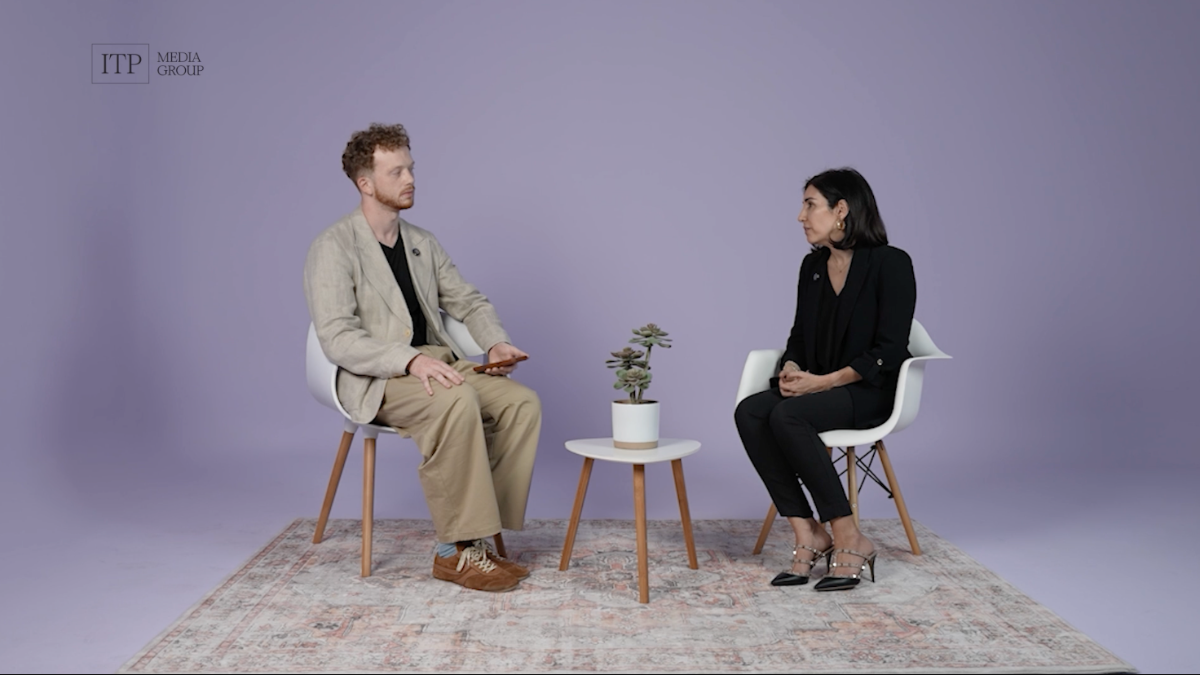

Speaking with Finance Middle East, Sarah Al-Shawwaf, Saudi Partner at Albright-Stonebridge Group discusses why Vision 2030 is as personal as it is economic for her, Saudi women, and the Saudi economy.
Vision 2030
Angus Anderson: It’s been a decade of transformation in the Kingdom of Saudi Arabia. Vision 2030 is really taking hold, but away from the financial side, it’s also been deeply personal for Saudis such as yourself. How has Vision 2030 affected women in the Kingdom?
Sarah Al-Shawwaf: That’s a really great question. If you look back a decade, many of the changes we see today would have felt exceptional. Today, you have Saudi women leading teams, joining boards, working in sectors they previously couldn’t enter, attending cultural and music events, travelling independently, driving, and becoming much more visible in public life.
When I decided to study law many years ago, I had to study in the United States because I couldn’t study law in Saudi Arabia.
Angus Anderson: What year was that?
Sarah Al-Shawwaf: You’re going to age me now. That was in 2005.
KSA Female Participation
Today, you see women across every part of the legal profession. The change goes far beyond individual opportunity. It has transformed the workforce, family life and expectations, and fundamentally changed how a young Saudi woman sees her potential in the country.
The numbers tell the story as well. Female workforce participation has exceeded the Vision 2030 target, reaching 36% by 2025.
Angus Anderson: Obviously, there have been changes across Saudi society, some of which you’ve just outlined. But how are women reaching higher positions within the C-suite, for example? How is that showing up across Saudi society?
Sarah Al-Shawwaf: We’ve seen a shift from simply welcoming women into the workforce to building systems that retain them, train them and develop them, enabling them to reach leadership positions and join boards.
That has changed society in practical ways. It has broadened decision-making, changed workplace culture and made leadership pipelines much more competitive.
Inclusion and the Psychological Shift
Angus Anderson: So you would say there’s been a real shift in how Saudis think about their future, their aspirations and ambitions?
Sarah Al-Shawwaf: Absolutely, especially for Saudi women. A decade ago, things were very different. Today, Saudi women are far more visible in national life, public life and across the workforce.
A few years ago, if you had asked me to name Saudi women leaders to look up to, I probably would have mentioned only a handful of exceptional figures. Today, you see inspiring Saudi women across generations and across industries.
I’ve met many of them personally through my work, and they’re leading the Kingdom’s transformation.
Saudi Female Role Models
Angus Anderson: Could you give us a few examples?
Sarah Al-Shawwaf: Certainly. I’ll mention women I’ve had the privilege of learning from and working alongside.
In business, there’s Lubna Olayan, who is a powerhouse in Saudi business and has consistently championed women’s participation and advancement.
There’s HRH Princess Reema bint Bandar Al Saud, whom I’ve had the pleasure of knowing and working with. She’s helped many of our U.S. clients expand into Saudi Arabia while consistently promoting opportunities for Saudi women. There is Abeer bint Mohammed Al-Akel, who has been a real force in arts and culture and has actively supported and uplifted women around her.
Having these women visible, learning from them and working with them shows that there really is no limit to what Saudi women can achieve. It’s incredibly inspiring.
International Perceptions
Angus Anderson: Those workforce changes and greater inclusion in Saudi society, how are they affecting foreign direct investment into the Kingdom? How are international investors reacting?
Sarah Al-Shawwaf: Vision 2030 has fundamentally changed how investors view Saudi Arabia. They increasingly see it not simply as an oil market, but as a long-term growth platform.
Women’s participation in the workforce is one part of a much broader picture. When I speak with clients, they’re focused on regulatory clarity, market access, ease of doing business, sector opportunities and capital market reforms.
But when they also see Saudi Arabia’s commitment to increasing women’s participation in the workforce, it reinforces how serious the Kingdom is about structural reform.
Quite simply, you cannot diversify an economy when half of the workforce is underutilised. Expanding women’s participation isn’t just positive for Saudi Arabia’s image—it strengthens the country’s long-term economic competitiveness.
Labour Force & FDI Nexus
Angus Anderson: So, labour market participation and inclusion are also helping drive foreign direct investment?
Sarah Al-Shawwaf: Exactly.
Angus Anderson: Looking ahead, the Public Investment Fund is increasingly moving into the execution phase of Vision 2030 between now and 2030. What areas do you think that will focus on? Is there further scope to build on labour market participation and opportunities for Saudis?
Sarah Al-Shawwaf: I think we’re entering a phase that’s less about symbolic reform and much more about execution.
In the labour market, that means continued hiring, greater private sector participation, talent development, Saudisation and creating more flexible working environments.
I recently read that Saudi Arabia introduced a requirement for large companies to provide childcare support for working mothers.
As a working mother myself, I think that’s remarkable and, in many ways, ahead of where many other countries are.
The focus now is ensuring that women aren’t simply entering the workforce, but that they’re retained, trained and empowered to continue progressing into leadership positions.
KSA Long-Term Fundamentals
Angus Anderson: We can’t avoid discussing the ongoing conflict involving Iran. What are investors telling you about how it’s affecting confidence in Saudi Arabia?
Many investors continue backing the UAE because of its underlying fundamentals. Are you seeing a similar story in Saudi Arabia?
Sarah Al-Shawwaf: Yes. We work with companies at different stages of their journey.
Some businesses are only beginning to explore the Saudi market, so naturally they may pause while monitoring regional developments.
But companies with established operations and long-term investments in Saudi Arabia have largely doubled down on their commitments and partnerships.
From discussions with the Saudi government, the message is that if you’re serious about investing in Saudi Arabia, this is the time to demonstrate that commitment by partnering with the Kingdom. The business community remains confident that Saudi Arabia will emerge even stronger.
Angus Anderson: It’s certainly impressive to see Saudi Arabia remain so resilient, with the strength of the Tadawul, despite the conflict.
Sarah Al-Shawwaf: In my experience, international perceptions often lag behind reality, and Saudi Arabia is a very good example of that.
Those who know Saudi Arabia firsthand see the changes every day—in universities, cafés, airports, restaurants and workplaces. Many of these changes have happened even faster than people expected.
As Saudi Arabia continues opening up to investors, visitors and international partners, that gap between perception and reality will continue to narrow, allowing more people to experience the transformation taking place on the ground.
Stay Up to Date with the Latest Updates at Finance ME
Oblique Consult’s Wahaj Siddiqui says GCC Advisory is Entering its Speed Era
UAE Reinforces Overseas FDI Commitment in U.S. Despite Iran War
EDGE’s Rodrigo Torres on Risk, Sovereignty and Defence Finance in a Multipolar World