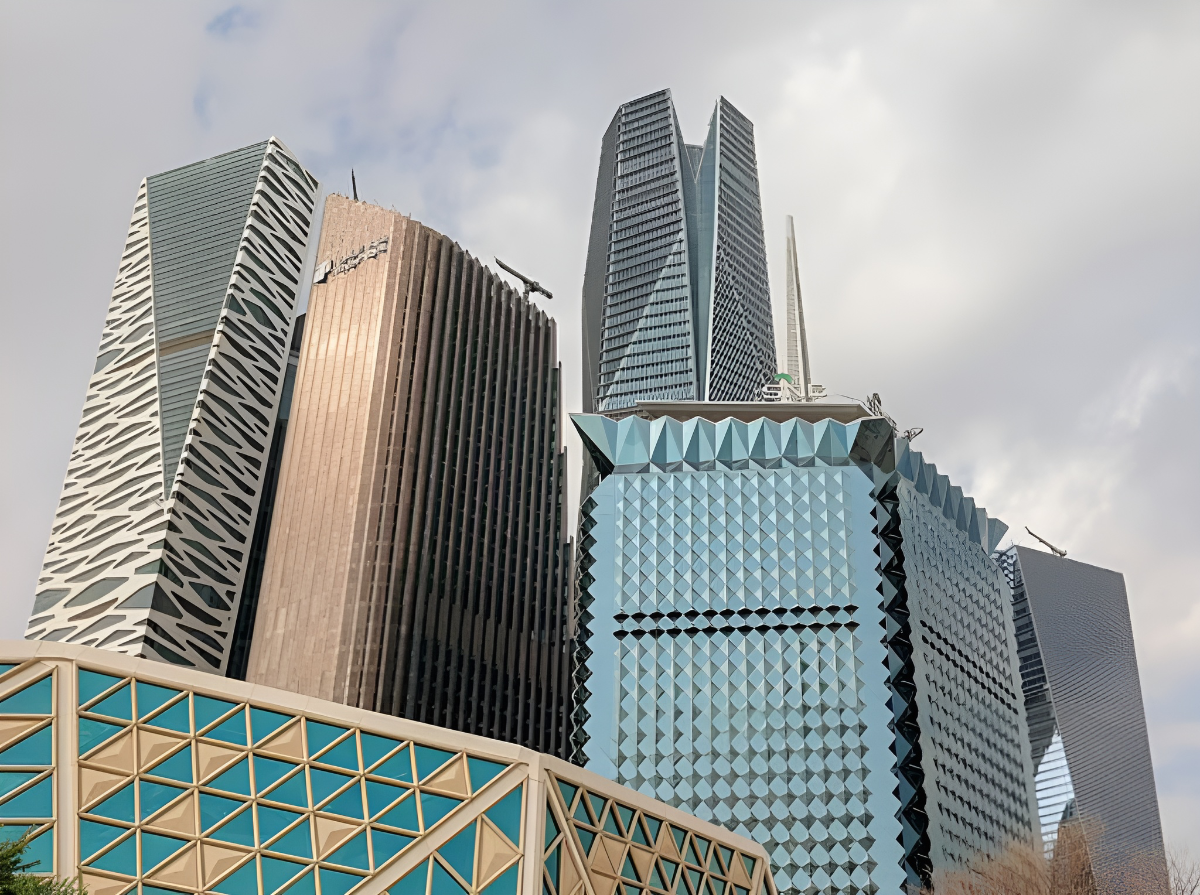
Fitch Ratings has confirmed Saudi Arabia’s Long-Term Foreign-Currency Issuer Default Rating (IDR) at ‘A+’ with a Stable Outlook, indicating stable fiscal and external balance sheets.
The rating reflects the nation’s robust government debt-to-GDP ratio and strong sovereign net foreign assets, significantly outperforming the ‘A’ and ‘AA’ medians alongside considerable fiscal buffers in public sector assets.
Threat of Cost-Push Inflation
Yet recent disruption in Hormuz coupled with the threats of a blockade on the Bab el-Mandeb by the Houthis question the fundamentals behind the latest rating.
Analysts warn that any blockade of the Bab el-Mandeb could inflate oil prices, pushing up insurance premiums for maritime shipping and slowing growth through cost-push inflation in the private sector.
Despite the immediate threats, the Kingdom’s fiscal buffers and external finances remain stable to offset any short to medium term inflationary spike.
Hormuz Uncertainty
Despite high geopolitical risks, particularly relating to tensions with Iran, the economy and public finances have demonstrated resilience amid the Iran war.
Any reopening of the Strait of Hormuz is expected to ease oil supply constraints, influencing oil prices and overall market dynamics significantly.
Fitch projects that real GDP growth will slow to 0.6% in FY26 due to trade disruptions but is expected to recover by FY27 as oil and petrochemical production normalises.
While non-oil growth may face challenges, consumer spending remains stable, supported by domestic projects and investment initiatives from the Public Investment Fund.
However, the breakdown of the Saudi-Houthi ceasefire (2022-2026) coupled with the potential of a blockade in the Bab el-Mandeb could undercut Fitch’s latest rating.
Fiscal Deficit
The fiscal deficit is anticipated to narrow in FY26, driven by rising oil revenues although it may widen again in FY27 due to falling oil prices and increased government expenditure.
Government debt is projected to rise to 41.3% of GDP by FY28, reflecting ongoing financial management adaptations in response to market conditions.
Banking Resilience
The Kingdom’s banking sector displayed resilience throughout recent geopolitical tensions, with stable non-performing loans and strong capital ratios.
The projected current account will shift to a deficit by FY28, attributed to lower oil prices and rising domestic demand for imported goods.
Fitch’s outlook for the nation highlights the importance of fiscal resilience to volatile oil prices and the need for ongoing structural reforms to sustain non-oil economic growth, reflecting a cautious but optimistic view on the Kingdom’s future financial stability.
Stay Up to Date with the Latest Updates at Finance ME
Sarah Al-Shawwaf: Vision 2030 Has Unlocked the Potential of Saudi Women
UAE Reinforces Overseas FDI Commitment in U.S. Despite Iran War
EDGE’s Rodrigo Torres on Risk, Sovereignty and Defence Finance in a Multipolar World