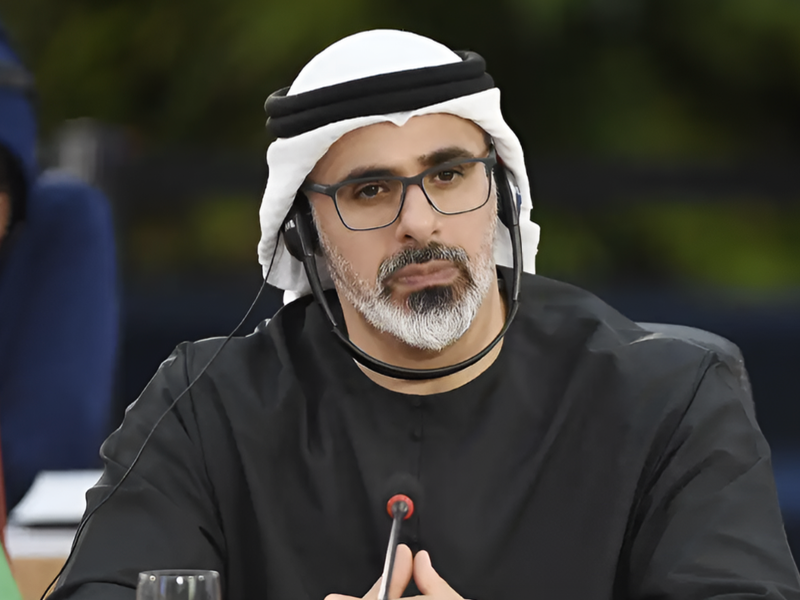



HH Sheikh Maktoum bin Mohammed bin Rashid Al Maktoum, First Deputy Ruler of Dubai, Deputy Prime Minister, and Minister of Finance, reviewed the Ministry of Finance’s (MoF) 2024 annual report, titled “Financial Sustainability and Global Leadership.”
The report details key achievements, financial highlights, and national initiatives undertaken by the ministry, as well as its regional and international contributions that reinforce the UAE’s position as a leading global financial hub.
At the review meeting in Dubai, attended by senior officials like Minister of State for Financial Affairs Mohamed bin Hadi Al Hussaini, HH Sheikh Maktoum highlighted the UAE’s strong commitment to stability and growth despite a fast-changing global economy. He praised the country’s visionary leadership and ability to adapt, which have made the UAE a resilient and appealing place for investors.
“In line with the vision of President Sheikh Mohamed bin Zayed Al Nahyan and Vice President Sheikh Mohammed bin Rashid Al Maktoum, the UAE is focused on building a diversified, integrated economy with people at its core,” he said. He also highlighted the ministry’s progress in fiscal management and sustainable financial policies, which have strengthened the national economy and elevated the UAE’s global reputation.
Sheikh Maktoum highlighted the success of the UAE’s Treasury bond and Islamic Sukuk programs, which support growth while maintaining financial liquidity. Strong sovereign credit ratings from Fitch and Moody’s reflect investor confidence.
Internationally, the ministry actively shapes financial policies through participation in the G20, BRICS, the IMF, and the World Bank forums, contributing to the global financial agenda and sustainable development.
Minister Al Hussaini highlighted how the ministry is leading the way in innovation and strong governance, helping to drive the UAE’s long-term Centennial 2071 vision. In 2024, they made important progress in managing assets better, using resources more efficiently, and moving forward with digital transformation aligned with the UAE Digital Government Strategy 2025 and the ‘We the UAE 2031’ vision.
The report also noted the Islamic T-Sukuk program raised Dh 17.1 billion through 14 auctions, with strong public debt management totalling Dh 23.45 billion.
Legislative progress included budget approval, adoption of consolidated financial statements, and strengthened anti-money laundering and tax laws. The ministry introduced reforms in leasing, inventory, and asset management.
Digital initiatives continue to boost transparency, efficiency, and service delivery, with AI and data analytics supporting fiscal policies and investor services.
The ministry’s expanding global presence has strengthened regional and international partnerships. By end-2024, the UAE had signed 146 double taxation avoidance agreements and 116 investment protection deals, reinforcing a secure business environment.
Looking ahead, the Ministry of Finance aims to sustain financial excellence by embracing advanced technologies, ensuring revenue sustainability, and deepening international cooperation, in line with the ‘We the UAE 2031’ vision to establish the UAE as a global finance and investment hub.